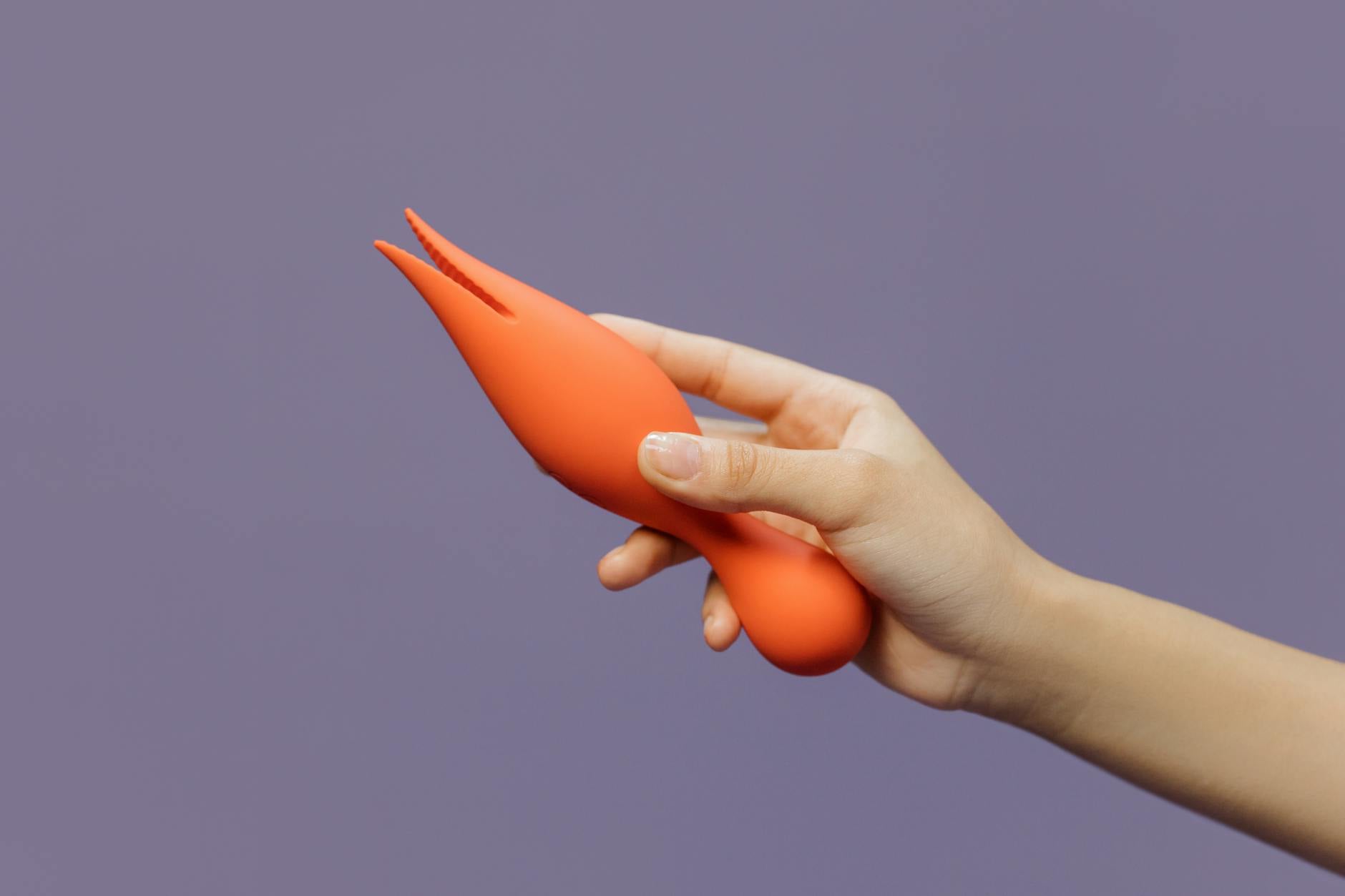
Here's the thing about clitoral sensitivity
Your clitoris has roughly 8,000 nerve endings packed into a space the size of a pea. Most traditional vibrators apply direct friction to this hypersensitive tissue, which feels great for some people and overwhelming or even painful for others. That's not a flaw in your body. That's a mismatch between the tool and the anatomy.
Lemon clitoral vibrators work differently because they use suction and air-pulse technology instead of direct contact. This distinction matters more than you'd think.
The anatomy of the clitoris (no, really)
Let me back up. The visible clitoral head is only the tip. The clitoris extends internally as a wishbone structure with two legs that wrap around the vaginal opening. When you're aroused, blood rushes into all of these tissues, making them swell and heighten sensation.
But here's where it gets interesting: the external glans (the part you can see) has nerve density that changes depending on arousal level, hormonal cycle, age, and individual variation. Some people's clitorises become more sensitive as arousal builds. Others experience what's called "numbness" after 10 to 15 minutes of direct stimulation. That's usually not numbness at all. It's overstimulation. The nerves are being asked to process more input than they can register.
Traditional vibrators use oscillation (side-to-side) or rotation to create stimulation. They rely on friction. The lem vibrator and other lemon sucker devices use air-pulse technology, which creates rhythmic suction and release against the entire clitoral area without requiring direct contact friction.
Why suction changes everything
Think of it this way: when you press a traditional vibrator directly against your clitoris, you're asking one small patch of nerve tissue to translate millions of vibrations per second. It's like asking someone to read a book with words stacked on top of each other. Eventually, the signal breaks down.
Suction spreads the stimulation across a wider area. The air pulse creates pressure waves that activate nerve clusters around the clitoris, not just on top of it. This distributed sensation feels less intense in a localized way but often delivers more complete, full-body pleasure. Many people report deeper, longer orgasms with air-pulse devices compared to traditional vibrators.
The lem vibrator and similar lemon clitoral vibrator designs also eliminate friction burn. If your clitoral tissue is naturally sensitive or has become irritated from too much direct stimulation, friction-based vibrators can worsen the problem. Suction doesn't have that issue because the technology works through pressure, not rubbing.
Who benefits most from air-pulse lemon vibrators
If any of these sound familiar, lemon sexual toys using suction technology might be worth trying:
You have naturally high sensitivity. Some people's clitorises are just wired to feel everything intensely. Traditional vibrators can feel sharp or even slightly painful. Air-pulse devices let you control intensity through suction strength rather than frequency, which feels different and often more manageable.
You experience overstimulation. After a few minutes of direct vibration, sensation goes numb or even uncomfortable. Suction-based lemon adult toys give you a longer window of responsive pleasure because they don't create the same nerve adaptation that direct friction does.
Your sensitivity has changed with age, hormones, or medication. Some people report that as hormones shift (whether from menopause, stopping birth control, or other causes), direct vibration feels jarring where it used to feel good. Lemon clitoral vibrators let you experience pleasure in a different way that might feel more aligned with how your body is responding now. How Lemon Vibrators Improve Sensitivity After Stopping Hormonal Birth Control covers this in detail if that resonates.
You want longer sessions without fatigue. Because air-pulse technology doesn't cause the same overstimulation response, people often report being able to enjoy sensation for 20, 30, even 45 minutes without hitting that numb wall. That opens up different kinds of pleasure.
The pressure gradient principle
Here's the biomechanics part. When a suction device like the lem vibrator creates a seal around the clitoral head, it generates a pressure gradient. The rhythmic release of that pressure creates waves of stimulation that ripple through the tissue.
This is wildly different from a vibrator moving back and forth at, say, 80 times per second. That's a fixed frequency hitting the same spot repeatedly. The pressure gradient approach activates nerve endings in sequence, almost like a gentle rolling motion through the tissue.
Research on air-pulse technology (published in studies on sexual medicine) shows that the pattern of activation is closer to natural sexual response than direct vibration. When you're aroused without a toy, sensation builds in waves. Air-pulse mimics that pattern more closely than oscillation does.
Intensity control actually matters
Most lemon sucker devices (including the lem vibrator) have 5 to 12 intensity levels. This matters way more than it sounds.
With a traditional vibrator, intensity usually means frequency: the motor spins faster. That's a blunt tool. If level 3 feels too mild and level 4 feels overwhelming, you're stuck.
With air-pulse lemon clitoral vibrators, intensity typically controls the strength and speed of suction. You're not speeding up the vibration. You're changing the pressure and rhythm. That's a precision tool. You can dial in exactly the sensation you want and stay there without the overstimulation crash.
This is especially helpful if you're using a lemon vibrator for the first time or if your sensitivity fluctuates. You can start low, explore, and build up without fear of jumping from comfortable to overwhelming in one click.
Integration with your natural response
Here's something nobody talks about: when you use a device that matches your body's natural response pattern, the pleasure integrates differently into your nervous system.
I've worked with many people who love direct vibration and many who find it grating. The difference isn't about being broken or high-maintenance. It's about whether the tool you're using resonates with your individual physiology. If you're someone who finds direct vibration jarring but hasn't tried air-pulse yet, lemon sexual toys might unlock a completely different experience of pleasure that you didn't know was available to you.
This is especially relevant if you're rebuilding sensation after recovery or life transitions. A gentler entry point can make all the difference in whether pleasure feels accessible or frustrating.
Materials and tissue safety
While we're talking about tissue protection, it's worth noting that lemon clitoral vibrators are typically made from premium silicone, which is non-porous and gentle on delicate tissue. The suction itself creates no microabrasions like friction can. If you have any history of clitoral irritation or sensitivity, this is a significant advantage.
Lubrication still matters. Even with air-pulse technology, a water-based lubricant helps create the seal that makes suction work and adds an extra layer of comfort. But you need far less of it than with traditional vibrators, and the pressure dynamics mean it's doing a different job.
The pleasure ceiling question
One thing I hear: "Won't suction feel less intense than a powerful vibrator?" Not necessarily.
Intensity and sensation are different. A high-powered traditional vibrator might feel more intense in the moment, but many people report that air-pulse devices deliver longer, deeper, more full-body orgasms. That's not less intense. It's a different architecture of sensation.
Think of it like the difference between a bright strobe light and a steady bright light. One feels more dramatic. The other might actually be delivering more illumination to more space. Pleasure works similarly.
Starting with lemon vibrators if you're sensitive
If you've tried traditional vibrators and found them uncomfortable, here's how to approach a lemon clitoral vibrator:
Start on the lowest setting. Sit with it there for a moment. The sensation builds as blood flow increases. Most people find the experience feels immediately different and often more pleasant than they expected.
Don't rush through intensity levels. Spend a few minutes at each setting. Your body's response will tell you where the pleasure peak is. For sensitive tissue, it's often not the highest setting. It's wherever intensity meets comfort, and that might be level 4 on a 10-level device.
Lubricate generously the first time. Water-based lube helps the device seal properly and adds comfort.
If sensation still feels overwhelming, you might be in overstimulation mode. Try a 30-second break, a few deep breaths, then return at a lower intensity. Your nervous system will recalibrate.
When to see a specialist
If clitoral tissue is painful even with gentle air-pulse stimulation, that's worth exploring with a healthcare provider. Conditions like vulvodynia, lichen sclerosus, or dermatitis can make all sensation feel raw. Those conditions are treatable, but they need proper diagnosis first.
General sensitivity and overstimulation are different from pain. Sensitivity is manageable with the right tool and approach. Pain usually needs professional input.
The bottom line
Your clitoris deserves a tool that matches your body, not a tool that forces your body to match the device. If you've always assumed you're "not a vibrator person" because traditional vibrators felt uncomfortable, you might be underestimating what lemon clitoral vibrators and air-pulse technology can offer.
Sensitivity isn't a limitation. It's information. The right lemon vibrator translates that information into pleasure.
People also ask
What's the difference between a lemon sucker and a regular vibrator?
Lemon sucker devices like the lem vibrator use air-pulse or suction technology instead of friction-based vibration. Traditional vibrators move side-to-side or spin at a set frequency. Lemon clitoral vibrators create rhythmic pressure waves through a sealed cup around the clitoris. This distributed stimulation spreads sensation across a wider area and typically creates longer-lasting pleasure without the overstimulation that direct vibration can cause.
Can I use a lemon clitoral vibrator if I have very sensitive tissue?
Yes, and it's often a better choice than traditional vibrators for sensitive people. Start on the lowest setting and focus on creating a good seal with lubrication. The suction approach is gentler on tissue than friction, and you can control intensity through pressure strength rather than speed. If any sensation feels painful rather than intense, that's a signal to check with a healthcare provider.
How long do orgasms typically last with air-pulse lemon vibrators?
Many people report longer orgasms (30 seconds to 2 minutes or more) compared to traditional vibrators, though this varies widely. The distributed stimulation pattern seems to create a different nervous system response. More important than duration is the quality of sensation. Focus on what feels good rather than chasing a specific timeframe.
Do I need lubricant with a lem vibrator?
Yes. Lubricant helps create the seal that makes suction work effectively and adds comfort. You typically need less lube than with traditional vibrators since there's no friction involved. Water-based lubricant is your best choice for silicone toys.
Why does my clitoris go numb after using a regular vibrator?
That "numbness" is usually overstimulation, not actual loss of sensation. Repeated direct vibration at a high frequency can cause nerve adaptation, where the receptors stop firing as readily. Switching to air-pulse technology or taking a break and returning at lower intensity often solves this. It's a signal that your body wants a different approach, not that something is wrong.
Are lemon clitoral vibrators quieter than traditional vibrators?
Generally, yes. Air-pulse devices create a gentle humming sound rather than the buzzing or whirring of traditional vibrators. That's useful if privacy is a concern, though no toy is completely silent.
If you're curious about whether air-pulse technology might be right for you, reach out. We're here to help you find tools that actually match your body, not tools that require your body to adapt.