Let's start with the honest part
If your clitoris feels raw after using a vibrator, that's not normal wear and tear. That's feedback. Your skin is telling you something about material, design, or technique. And here's the thing: most of what you've heard about "sensitive" pleasure is actually just mismatched engineering.
The right lemon clitoral vibrator should feel like relief, not friction. Most don't. Let's talk about why that gap exists and how to close it.
What sensitive clitoral skin actually means
Sensitivity is not weakness. Your clitoris has 8,000 nerve endings in a space smaller than a pea. That density is why it feels so much more than other parts of your body. Add hormonal fluctuations, prior irritation, or skin conditions like eczema or vulvodynia, and that sensitivity amplifies.
Here's what matters: the surface you're stimulating is thinner and more reactive than you probably think. It's covered in a delicate mucous membrane, not toughened skin. Sandpaper texture, rigid materials, and high-frequency vibration that works beautifully on other bodies can feel aggressive or painful on yours.
But this doesn't mean you can't have intense pleasure. It means you need tools designed for precision, not power.
Why lemon clitoral vibrators are different
The lemon sucker design (also called air-pulse or suction technology) works by creating gentle waves instead of direct mechanical vibration. This matters enormously for sensitive skin because the stimulation happens through tissue manipulation, not surface friction.
Compare two approaches:
Traditional vibrators deliver rapid oscillation directly to tissue. On sensitive skin, this can feel intense immediately, sometimes uncomfortably so. The sensation is concentrated and direct.
Lemon clitoral vibrators create a gentle pulling and releasing motion that stimulates nerves through suction patterns. The sensation is broader, gentler to initiate, and builds more gradually. For sensitive clitorises, this ramp-up time is crucial. It lets arousal happen without shock.
The silicone head of a lemon vibrator also plays a role. Silicone is non-porous, hypoallergenic, and smooth. It doesn't harbor bacteria the way porous materials can, and it won't degrade or off-gas irritants into sensitive tissue. When you're already dealing with sensitivity, material safety isn't optional.
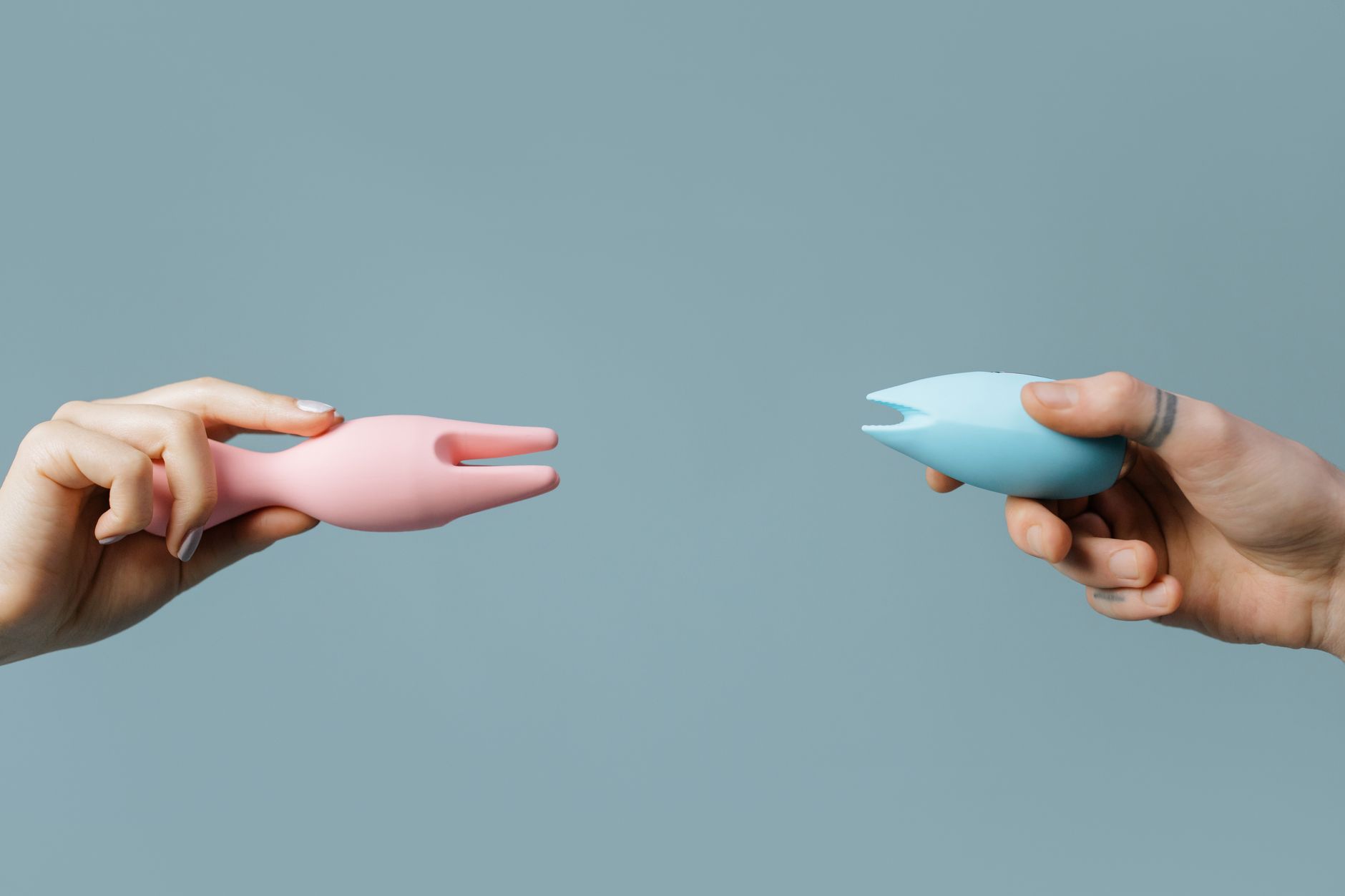
Photo by cottonbro studio on Pexels
The material science layer
Not all silicone is created equal. Medical-grade silicone (the kind reputable brands use for clitoral vibrators) is non-toxic, doesn't leach chemicals, and resists bacteria colonization better than alternatives.
When you're evaluating any clitoral vibrator for sensitive skin, check:
Durometer rating. This measures silicone hardness on a scale from 30A (very soft) to 90A (firmer). For sensitive clitoral use, 40A-60A is the sweet spot. Hard silicone (above 70A) can feel jarring. Too soft (below 40A) loses structural integrity and doesn't deliver precise stimulation.
Surface texture. Smooth silicone surfaces reduce friction and irritation. Ridged or textured surfaces can feel abrasive on sensitive tissue. Look for smooth finishes on the contact point.
Seam construction. Poorly fused seams can snag delicate skin or harbor bacteria. Quality lemon clitoral vibrators have seamless or minimally seamed heads designed specifically for internal safety.
Head shape. Narrower, more ergonomic heads mean you control placement better. This matters because sensitive clitorises often respond better to indirect stimulation (stimulating the hood or surrounding tissue) rather than direct contact.
Technique adjustments that actually help
Even with the right tool, technique determines comfort. Here's what I recommend to clients with sensitive skin:
Start at the lowest setting. This sounds obvious but most people jump to pattern 3 or 4 immediately. With sensitive tissue, begin at setting 1 for at least five minutes. Your body needs time to acclimate. Arousal will build. Resistance won't.
Approach indirectly. Place the suction head over the clitoral hood or just above the clitoris rather than directly on the glans. This distributes pressure and feels gentler while still delivering intense sensation. Many people with sensitivity find this angle transforms the experience from uncomfortable to incredible.
Use generous lubrication. Even though suction vibrators don't require lube the way other toys do, a water-based lube reduces friction between silicone and skin. This simple addition often eliminates irritation completely.
Build patience into your routine. Sensitive clitorises respond better to longer warm-up periods. Budget 20-30 minutes instead of 10. Let your nervous system settle. Let arousal accumulate gradually. This isn't inefficiency. It's how your body is wired.
Take breaks. If you feel rawness or fatigue, stop. Rest for 30 seconds. Switch to a different stimulation pattern or hand technique. Your clitoris needs recovery time, especially if you're prone to sensitivity.
When to reconsider your approach entirely
Sensitivity sometimes signals something beyond material or technique. If pain accompanies sensation, or if sensitivity developed suddenly where it didn't exist before, that's worth a conversation with your doctor.
Conditions like vulvodynia, dermatitis, or hormonal changes can make even the gentlest lemon clitoral vibrator feel uncomfortable. This doesn't mean vibrators are off the table. It means working with a healthcare provider to rule out underlying causes first.
Similarly, if you're taking medications that affect skin sensitivity (certain antihistamines, for example, can reduce lubrication and increase irritation), your provider might have timing or technique suggestions that help.
The biggest mistake I see
People with sensitive clitorises often give up on vibrators entirely after one bad experience. They assume their body "can't handle" them. This is like deciding you can't eat a certain food because one restaurant prepared it badly.
The design of the tool matters profoundly. A lemon vibrator's suction-based approach, combined with smooth medical-grade silicone and intuitive control over intensity, is specifically engineered for sensitive tissue. The difference between a poorly matched toy and the right one isn't subtle. It's the difference between pain and pleasure.
Your sensitivity isn't a flaw to work around. It's signal that you need precision engineering. That's exactly what lemon clitoral vibrators deliver.
FAQ
Can I use a lemon vibrator if I have eczema on my vulva?
Yes, but with caution. Medical-grade silicone is gentler than most materials, and the suction approach doesn't create friction that can trigger eczema flare-ups. Before using any vibrator, check with your dermatologist. Keep the toy clean between uses, use a fresh water-based lube each time, and stop immediately if you notice redness or itching. Many people with eczema actually find lemon clitoral vibrators gentler than their skin care routine itself.
Why do lemon clitoral vibrators feel less intense than traditional vibrators?
They're not less intense. They're differently intense. Suction-based stimulation feels more diffuse and builds gradually, whereas traditional vibrators deliver concentrated oscillation immediately. For sensitive clitorises, this difference is actually an advantage. The gentler ramp-up means you can reach deep, sustained pleasure without the shock that causes irritation. Many people report their most satisfying orgasms come from lemon vibrators specifically because the extended build-up intensifies the release.
How often can I use a lemon vibrator if I have a sensitive clitoris?
This varies by person, but the general rule is: if you feel rawness or fatigue, you've gone too long. Most people with sensitive tissue can enjoy vibrator use 2-4 times per week without irritation, provided they use good technique (generous lube, indirect approach, lower settings). Some people do daily. Listen to your body. Irritation is feedback. Honor it.
Does water-based lube actually help with sensitivity?
Yes, substantially. Lubrication reduces friction between the silicone head and your skin. Even though suction vibrators don't require lube mechanically, adding it creates a protective barrier and makes the sensation feel silkier and less intense. For sensitive clitorises, this often means the difference between discomfort and genuine pleasure. Use a fresh application each time.
Are lemon suckers (air-pulse vibrators) safe for people with vulvodynia?
They can be, but vulvodynia requires individual assessment. The suction approach is gentler than traditional vibration, and many people with vulvodynia find lemon clitoral vibrators manageable where other toys are not. That said, some people with vulvodynia are sensitive to any stimulation intensity. Talk with your pelvic health physical therapist before introducing any vibrator. If you do use one, start conservatively: lowest setting, shortest sessions, generous lube, and immediate stopping if pain appears.
Can sensitivity go away, or is it permanent?
Sensitivity isn't always permanent. Hormonal changes, stress levels, medications, and even recent friction can temporarily increase sensitivity. As your nervous system calms and you explore gentler approaches, many people find their tolerance improves. That said, some people have intrinsically sensitive clitorises, and that's fine. It's not something to "fix." It's something to accommodate with better tools and technique. Whether your sensitivity shifts over time or stays constant, the right lemon clitoral vibrator will work for your body as it is now.
The bottom line
Sensitive skin isn't a barrier to pleasure. It's information. It tells you that generic, one-size-fits-all vibrators won't work for your body. A lemon clitoral vibrator, with its suction-based design and smooth medical-grade silicone, respects that sensitivity while delivering genuine, sustained pleasure.
Start low, go slow, use lube, approach indirectly, and pay attention to what your body is telling you. With the right tool and technique, sensitivity becomes not a limitation but a doorway to deeper sensation.
If you want to explore further, reach out to our team. We're here to help you find the right fit.
Sources
Based on clinical insights from Certified Gottman Method relationship specialists and evidence-based approaches to sexual wellness and body literacy. For medical concerns regarding vulvodynia or dermatological conditions, consult a healthcare provider.