The anxiety loop nobody talks about
Performance anxiety isn't just a partner problem. Solo, it's worse. You're both the audience and the performer, and your brain is keeping score.
The spiral is familiar: you want to feel something, so you go harder. Harder doesn't work, so you go faster. Fast doesn't work, so you get frustrated. Frustration kills the whole thing. Next time you reach for a toy, your nervous system already knows it doesn't work, so arousal shows up late and leaves early. It's not broken. It's just that your threat system hijacked your pleasure system.
This is where most vibrators fail. They demand engagement. A traditional vibrator requires you to stay in a rhythm, judge whether it's working, adjust based on performance metrics. You're still performing. You're still tracking. You're still in your head.
Why lemon vibrators work differently for anxiety
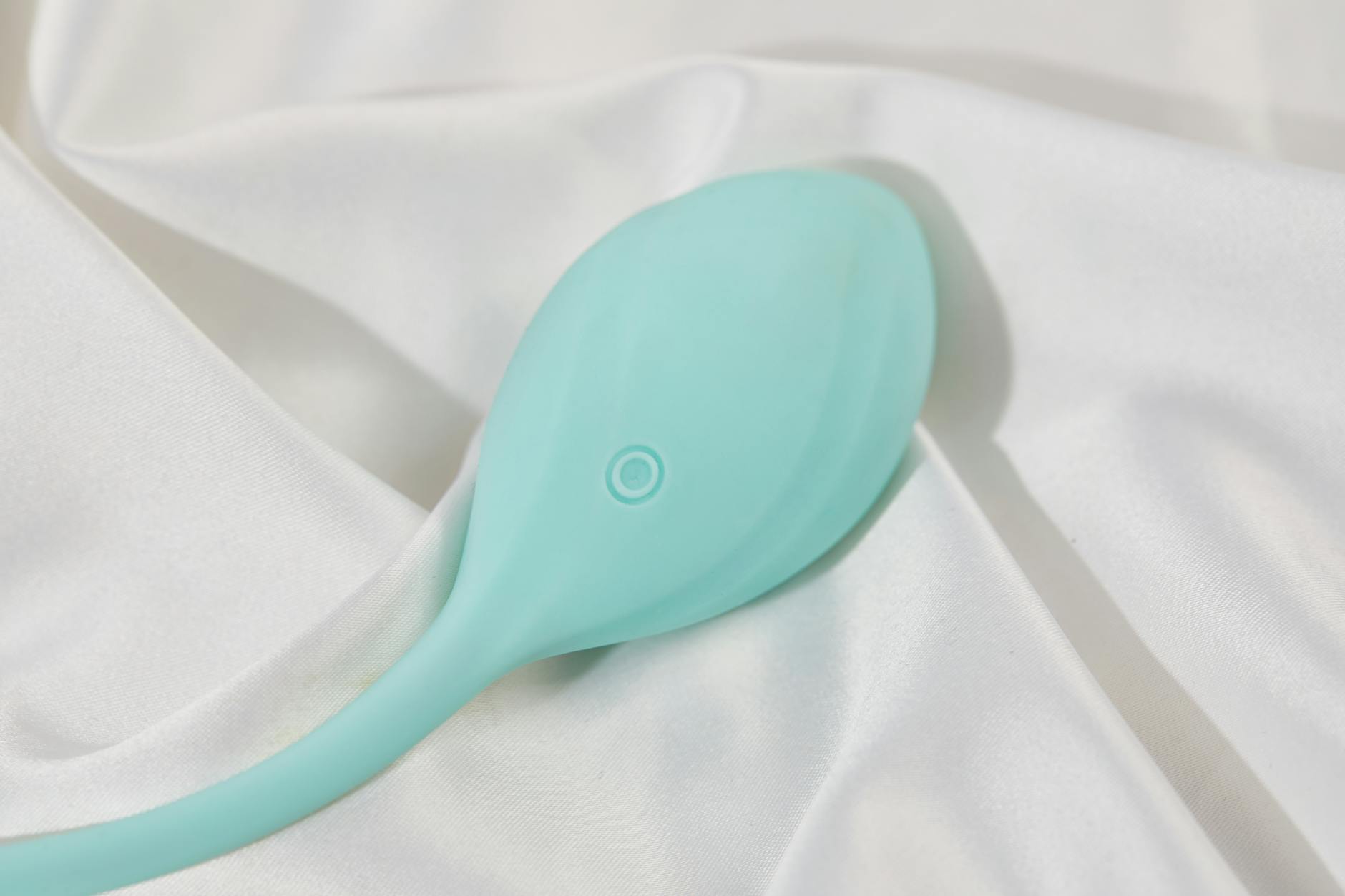
Clitoral suction devices like the Lem use a completely different mechanism. Instead of vibration, they create a gentle vacuum that stimulates the entire clitoral network, not just the external tip. The sensation is passive in the best way. You don't have to do anything. You don't have to judge. You don't have to perform.
Here's what changes psychologically: a lemon vibrator's suction pattern doesn't feel like something you're failing at. It feels like something that's happening to you. That shift, from active performer to passive receiver, is massive for people trapped in the performance anxiety cycle.
You can't "do it wrong" with suction. There's no rhythm to maintain, no speed to get right, no angle to perfect. The tool is working. You just show up and let it.
The role of unpredictability (in a good way)
Traditional vibrators have predictable patterns. You know what's coming. Your brain anticipates, which is great for some people and terrible for people with anxiety. Anticipation requires prediction, and prediction requires you to stay engaged and monitoring.
Lemon clitoral vibrators have a slightly different sensation signature. The suction sensation is continuous but varied in a way your mind can't anticipate. There's no "here comes the climax" warning that lets anxiety creep in. You're not waiting for the payoff. The payoff is happening right now, and it's different each second.
This randomness, paradoxically, is calming. Your threat system can't keep score if the game keeps changing.
Solo play as anxiety recovery
One of the smartest things you can do if sexual performance anxiety is wrecking your pleasure is to rebuild your relationship with your own body without another person's expectations in the room.
I often recommend this to clients: spend a week using a lemon vibrator solo, focusing on sensation rather than destination. Not "Can I orgasm?" but "What does this feel like?"
After a few sessions, something shifts. Your nervous system realizes that pleasure is available without performance. That it's not a test you can fail. That feeling good doesn't require productivity or proof. When you eventually bring a partner back into the room, you're not starting from the deficit of "my body doesn't work." You're starting from "my body knows how to feel good."
The specific advantage for people who ruminate
Rumination is when your brain loops the same anxious thought. "What if I can't?", "What if they can tell?", "Why isn't this working?" People with performance anxiety are chronic ruminators.
Because suction is passive, it's harder for your brain to ruminate. You're not managing anything. You can't troubleshoot your way to pleasure, so your brain eventually gives up trying and just receives.
Over time, this builds new neural pathways. Your nervous system learns that you don't have to earn pleasure. That not controlling the experience is safe. That your body can just... work.
Shifting the narrative from solo to partnered
If you've been using a lemon vibrator to work through performance anxiety, the transition back to partnered sex is worth planning. The good news: you're not starting from scratch. You've reset your baseline.
Many of my clients find that using a lemon clitoral vibrator with a partner is actually easier than going back to partnered sex without any device. Why? Because the device becomes a third thing in the room. The pressure isn't on your body or their body. It's on the tool. Both of you can relax and focus on connection instead of mechanical function.
If your anxiety comes from a history of partners who made sex feel like a performance test, this shift in focus is healing. The device isn't a crutch. It's a permission structure.
Managing expectation creep
One risk: you can develop performance anxiety around a lemon vibrator too. "What if it doesn't work today?" "What if I've lost it?"
The antidote is the same as it was before: remember that the goal isn't to achieve something. It's to feel something. On days when the Lem isn't landing, that's data, not failure. Your body's just saying something else is going on. Stress. Cycle. Attention. Sleep. None of those things mean you're broken.
Keep your relationship with the device light. It's a tool. Tools are sometimes exactly what you need, and sometimes you need something different. Both are fine.
The long-term reset
Performance anxiety is stubborn because it's rooted in nervous system protection. Your brain learned that sex was risky or judgmental, so now it triggers your threat response automatically. You can't think your way out of that. You have to feel your way out.
A lemon vibrator, used consistently over weeks, can help you build evidence that pleasure is available without performance. That your body works. That you're not broken. That you deserve to feel good without earning it.
This is why I often recommend them to clients navigating anxiety, regardless of whether they have a partner. Solo play with the right tool is one of the fastest ways to reset your relationship with your own pleasure. And once that's solid, everything else gets easier.
Frequently Asked Questions
Can a lemon vibrator help with anxiety-related loss of libido?
Yes, but indirectly. Performance anxiety usually doesn't kill desire. It kills the ability to access arousal when you do feel desire. A lemon vibrator removes the "performance test" element, which often allows arousal to show up more reliably. If your libido itself has flatlined (low desire, not just difficulty with arousal), that's a different conversation and might point to other factors like depression, hormones, or relationship disconnection. Worth talking to a therapist or doctor about that angle.
Should I use a lemon vibrator every time I have sex with a partner?
No, and you don't want to. The goal is to reset your nervous system so you can access pleasure with and without a device. Use it solo until you feel confident in your own body again. Then integrate it into partnered sex strategically. The magic happens when both of you are relaxed enough to not need it sometimes.
What if performance anxiety comes back after I start feeling better?
It probably will, in small waves. That's normal. Anxiety doesn't go away permanently. It gets smaller and quieter. When it returns, you now have evidence that your body can feel good, which is more powerful than any thought. Go back to solo play with your lemon vibrator for a few sessions. Remind yourself. Reset. Move forward.
How long does it usually take before performance anxiety improves?
Most of my clients report significant shifts within 4 to 8 weeks of consistent solo play. But "consistent" matters. Once or twice a month won't do it. You're asking your nervous system to learn something new, which requires repetition. 2 to 3 times per week is the sweet spot for actual rewiring.
Is it normal to feel weird or awkward using a lemon vibrator if I have anxiety?
Completely. The first few times, shame or anxiety might show up. You're doing something your nervous system is still scared about. Stay with it anyway. That awkwardness usually dissolves within 3 to 5 sessions. By session 6, most people report that it feels natural, even grounding.
Can my partner help me work through this, or does it have to be solo?
Both work, but solo is foundational. Your partner's presence adds another variable. Their attention, approval, or judgment (even unintentional) can trigger your threat system. Solo play removes that noise. Once you've rebuilt trust in your own body, partnered exploration becomes complementary instead of the test you're trying to pass.
What comes next
Performance anxiety tells you that pleasure is something to earn. That's the lie. Pleasure is your baseline. Performance anxiety just covers it up. A lemon vibrator won't fix anxiety. But it creates the conditions where your nervous system can finally learn that you're safe, that your body works, and that you deserve to feel good without proving anything.
If you're ready to rebuild your relationship with pleasure, solo play with a device designed around sensation rather than performance is one of the fastest paths forward. Your body already knows what feels good. Sometimes it just needs permission to remember.