Let's start with what matters most
Recovering from sexual trauma is not a straight line, and pleasure doesn't come back on a schedule. If you're exploring self-pleasure after trauma, that's an act of reclamation. Using a lemon vibrator as part of that journey isn't frivolous or premature. It's a tool for learning what feels safe, what feels good, and what feels like it belongs to you again.
The nervous system needs time. Your mind needs permission. And your body needs to know that this experience is different from what happened before. A clitoral vibrator like the Lem can actually help deliver that message, if you use it thoughtfully.
How trauma changes your physical response
Sexual trauma rewires the nervous system. The brain learns to perceive arousal cues as danger. Your genitals might not respond the way they used to. You might feel numb, hypervigilant, or completely disconnected from physical sensation. Some survivors experience involuntary tensing of the pelvic floor. Others feel dissociation during moments that should feel good.
This isn't weakness. It's exactly how your nervous system is supposed to work when it's protecting you. The survival response is doing its job. Now the job is teaching your system that pleasure can be safe.
A clitoral vibrator works differently than partnered touch. It's not responsive to you. It doesn't have expectations. It can't violate your boundaries because you control every variable. The rhythm doesn't change. The pressure is consistent. For many trauma survivors, that predictability itself is healing.
Building a foundation of safety first
Before you ever touch a vibrator, safety has to come first. Here's what I recommend to my clients in recovery.
Environment matters. You need a space where you can lock the door, where you won't be interrupted, and where you feel genuinely alone. This sounds simple, but for many survivors, being alone used to mean vulnerability. Teaching yourself that alone is now safe takes repetition. Start small. Five minutes in a locked room where you're just sitting. Then ten. Then longer. Your nervous system is learning.
Grounding practices first. Before any pleasure work, practice grounding. Feel your feet on the floor. Notice five things you can see, four you can hear, three you can touch, two you can smell, one you can taste. This anchors you in the present moment and the present body, not the memory body.
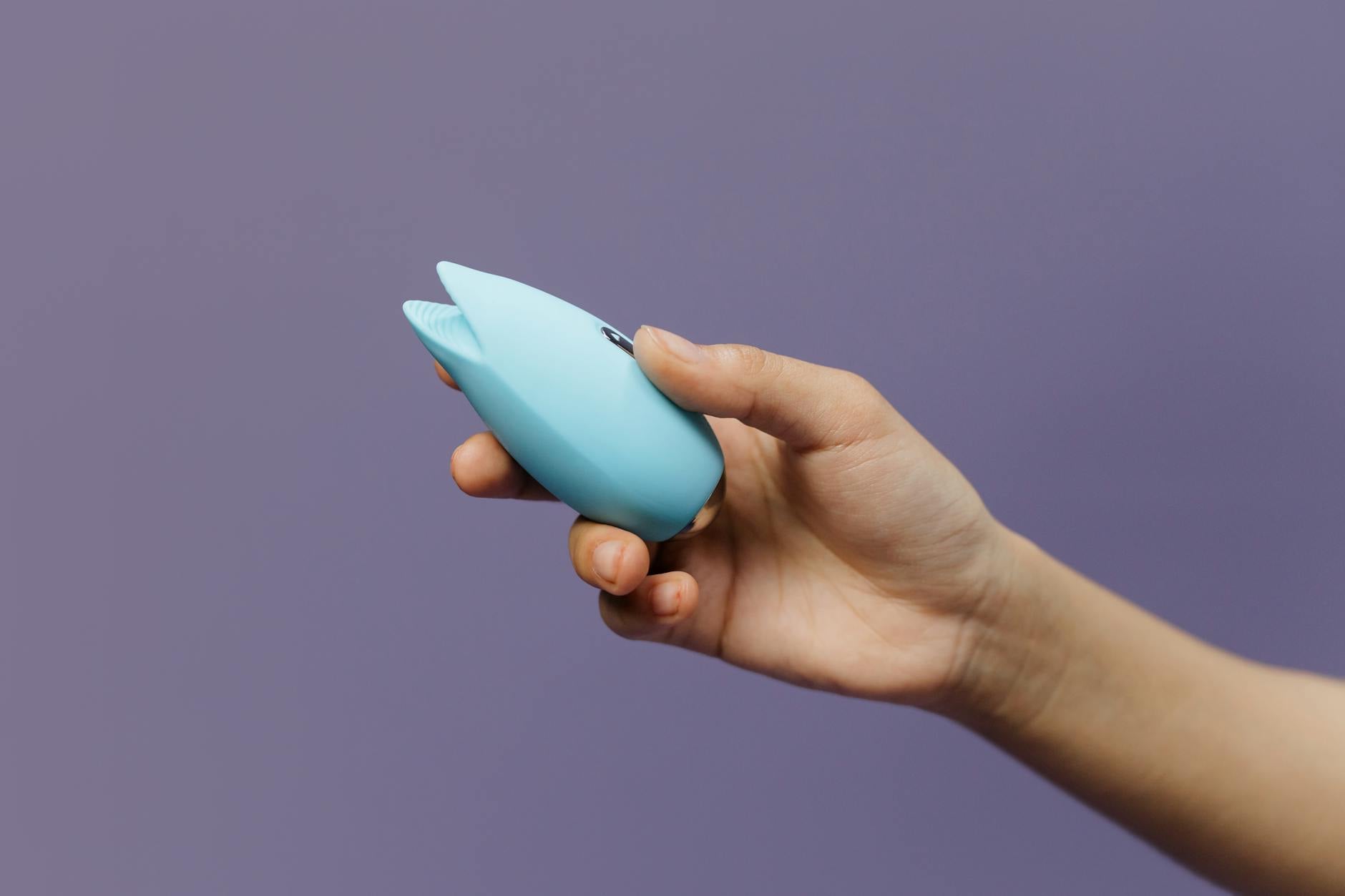
Start clothed. When you first hold a lemon vibrator, keep your clothes on. Just hold it. Feel the weight. The texture. Listen to the sound it makes. There's no pressure to use it yet. You're getting your nervous system used to the object without the vulnerability of nakedness or the expectation of sensation.
Honor your pace. If you're not ready to touch your genitals with anything, that's completely valid. Some people spend weeks or months just being in the same room as the vibrator. Some take months before they undress. Your timeline is the right timeline.
When you're ready to explore sensation
The first time you use a lemon vibrator after trauma, start low and slow. The Lem has multiple intensity settings. Begin on pattern one. Not pattern three. Not the high setting. Pattern one feels like a light hum.
Start on your arm or your leg. Not your genitals yet. Notice what the sensation feels like. Notice if your nervous system stays calm or if it reacts. If you feel safe, move to your inner thigh. Stay there for as long as feels good. This isn't about reaching anything. It's about proving to yourself that this touch is different.
When you do move to your clitoris, keep your underwear on initially. The barrier between you and direct contact can feel less overwhelming. Many survivors find that the air-suction technology in a lemon vibrator actually feels gentler than traditional vibration because it's working with your body's natural response rather than forcing stimulation.
If you feel any sensation that reminds you of the trauma, stop immediately. That's not failure. That's your nervous system telling you something important. Pause. Ground yourself. Come back to the present moment. You can try again tomorrow, or next week, or never. The goal is safety, not persistence.
Working with a partner, if you choose to
Many trauma survivors eventually want to rebuild intimate connection with partners. Using a lemon vibrator together can actually support that process, but only if boundaries are crystal clear.
Have a conversation before anything physical happens. Tell your partner what you need. Maybe that's "I want to use this alone first before we do anything together." Maybe it's "I want you in the room but not touching me." Maybe it's "I need a safe word and I need you to respect it immediately."
The Lem vibrator gives you control. Literally. You're holding it. You're deciding the pressure and the pattern. That control is essential when rebuilding trust in your own body and potentially in a partner.
If you're using the vibrator with a partner, they should follow your lead on pace, pressure, and whether to stop. No assumption. No moving forward unless you explicitly ask for it. This isn't about performance. It's about rebuilding the sense that your body is yours.
What to expect emotionally
Using a vibrator after trauma can bring up a lot. Relief. Grief. Anger. Numbness that suddenly becomes sensation. You might have a wonderful experience and then feel fragile afterward. That's normal. Your nervous system is processing.
Some days you'll feel disconnected from sensation. Some days sensation will feel too intense. Some days you might feel triggered and need to stop. This variability is part of healing, not a sign that you're doing it wrong.
I encourage my clients to journal after solo pleasure sessions. Not performance analysis. Just "What did I feel? What did I need? What do I want differently next time?" Over time, this builds a sense of agency and self-knowledge that extends far beyond the vibrator.
When to bring in additional support
A vibrator is a tool, not a therapist. If you're recovering from sexual trauma, you need professional support. A trauma-informed therapist, ideally someone trained in EMDR or somatic experiencing, can help you process what happened and rewire your nervous system's response.
There's also a specific approach called sensate focus, which is designed to help survivors reconnect with their bodies. A sex therapist trained in trauma recovery can guide you through this systematically.
Using a lemon vibrator alongside professional therapy amplifies the healing. The vibrator helps you practice safety and sensation in your own time. Therapy helps you process the deeper patterns and beliefs that trauma created.
A permission slip for pleasure
After trauma, pleasure can feel like a betrayal or a luxury you don't deserve. It's neither. Pleasure is a sign that you're healing. Your body's ability to feel good is evidence that you're reclaiming what was taken.
Using a clitoral vibrator is not frivolous. It's not rushing recovery. It's an act of self-directed healing that honors your timeline and your autonomy. You get to decide what pleasure looks like now. You get to control the pace, the pressure, and the experience entirely.
People also ask
Q: Is it normal to feel nothing when using a lemon vibrator after trauma?
Completely normal. Trauma numbs sensation as protection. That numbness sometimes lifts gradually, sometimes suddenly, sometimes inconsistently. If you feel nothing, that's not failure. Your nervous system is still learning to associate vibration with safety. Keep trying if you want to. If you don't want to, that's valid too.
Q: Should I tell my therapist I'm using a vibrator during recovery?
Yes. A trauma-informed therapist won't judge you. They'll actually ask useful questions about how it feels, what patterns you notice, and what your experience is teaching you about your body. This conversation is part of healing, not something to hide.
Q: What if using a clitoral vibrator triggers flashbacks?
Stop immediately and ground yourself using the 5-4-3-2-1 technique. Notice where you are now, who's with you, that you're safe. A flashback is your nervous system confusing past and present. It doesn't mean vibrators are wrong for you. It means your system needs more time or a different approach. Work with a therapist on this.
Q: Can I use a lemon vibrator with a partner before I've used one alone?
You can, but most survivors find it helpful to explore alone first. Solo exploration lets you learn what feels good without the pressure of performing or the activation that comes from partner presence. Alone first usually makes partnered use feel safer and more genuine.
Q: Is pleasure something I should expect during recovery or is it too early?
There's no "too early" if you feel ready. For some survivors, pleasure returns quickly. For others, it takes years. The goal isn't to force sensation or achievement. It's to rebuild the sense that your body is yours and that touch can feel safe. That's the real healing.
Q: How do I know if I'm ready to use a vibrator after trauma?
You're ready when you want to be. Not when someone else thinks you should be. Not when you think you "should" be healed. When you feel curious enough or brave enough to try. That's readiness.