
The problem nobody talks about
Routine isn't the enemy of intimacy. Predictability is. There's a difference, and it matters.
You can have the same partner, the same bedroom, the same time every Friday night, and still feel deeply present. Or you can have all those things and feel like you're going through the motions. The difference isn't the frequency. It's whether your nervous system is awake.
When physical touch becomes automatic, your brain stops registering it as stimulation. The same caress that once made you shiver now barely registers. You're not broken. Your body is just doing what efficient nervous systems do. They adapt. They stop paying attention to signals that feel safe and predictable.
Why sensation dies in routine
This happens because of something called "habituation." Your nervous system is designed to filter out constant, unchanging input so it can focus on what's new or threatening. The same kiss, the same touch, the same sequence of events. Your body learns it and stops responding with the same intensity.
Most couples interpret this as lost attraction. It's not. It's neurology.
Here's what actually happens: after months or years of the same physical pattern, your brain categorizes touch as "safe and known." Your dopamine response drops. Arousal takes longer to build because your body isn't getting the signal that something unexpected is happening. The anticipation dies. And without anticipation, arousal is half-powered.
How a clitoral vibrator breaks the pattern
A tool like the Lem works here because it does something your hands and body can't do alone. It introduces novelty without introducing a new person.
Novelty is what wakes up your nervous system. Not because the vibration feels better than a finger. It probably doesn't. But because it feels different. It's unexpected. It introduces an element your brain can't predict, which means your body has to pay attention again.
This is why couples who've been together for years often report that using a clitoral vibrator together reignites something they thought was gone. It's not that desire disappeared. It's that they stopped looking at each other, stopped wondering what would happen next.
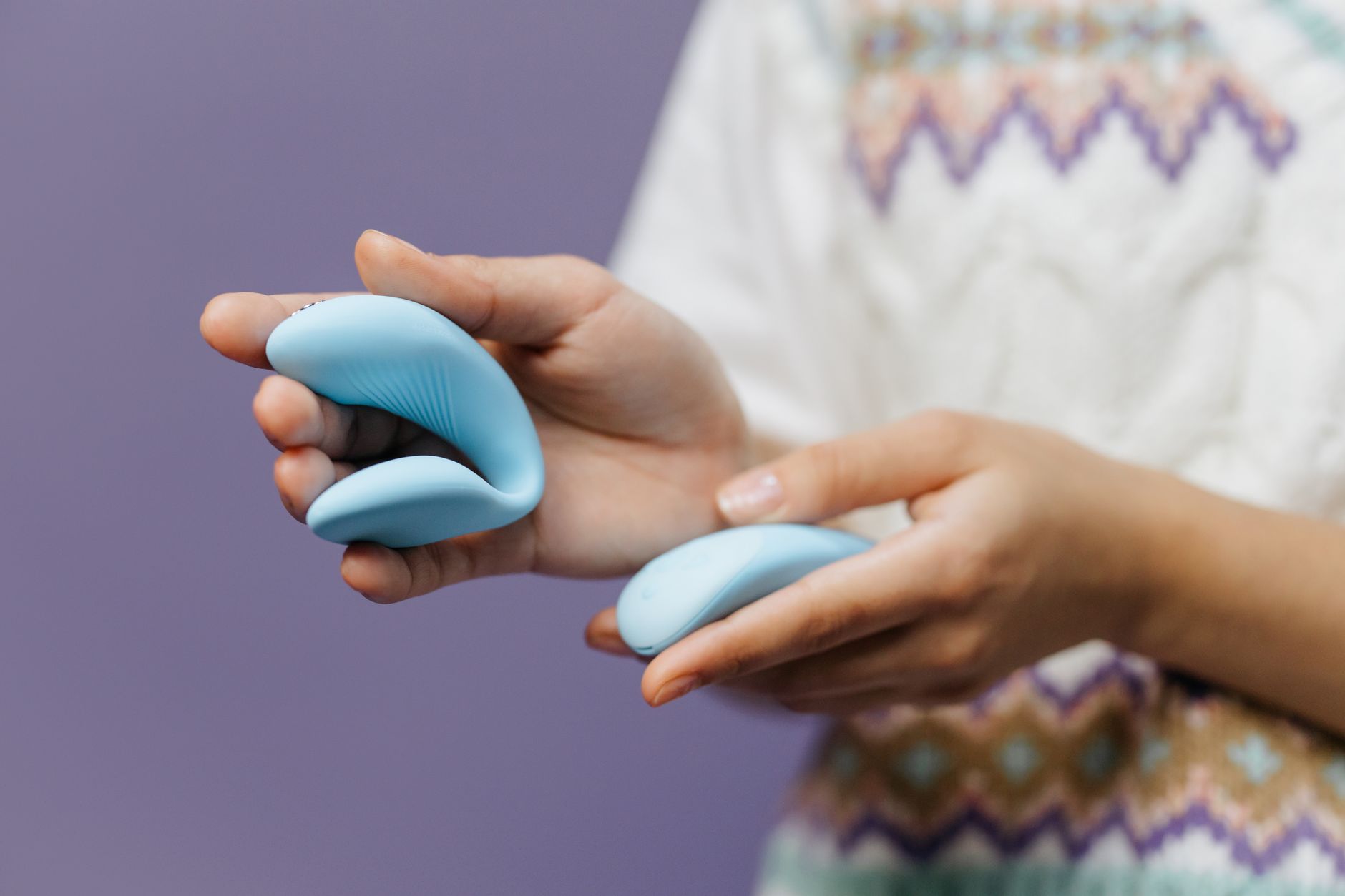 Photo by cottonbro studio on Pexels
Introducing it as a conversation, not a toy
The biggest mistake people make is treating a vibrator as a solution instead of a doorway to a bigger conversation.
If you introduce a lemon clitoral vibrator without talking about what it means, your partner might hear: "I'm bored." "You're not enough." "I need something you can't give me." All of those are understandable insecurities. And they're almost always based on a misreading of what the tool actually does.
Start here: "I miss feeling alive in my body. I miss the part of us where we experiment and surprise each other. I want to try something that might help both of us pay attention again."
That's not about the vibrator. It's about presence.
If your partner is resistant, which is common, you don't have to convince them to use it with you immediately. Use it solo first. Let them watch if they want. Let them see that it's not a replacement for them. It's an amplifier. It's a tool that helps you get to the place where you can be more present and responsive with them.
The actual mechanics: how to use it when routine is the problem
Three things change when routine is what you're fighting.
Timing and anticipation. Don't use it the same time every week. Break the pattern by using it at unexpected moments. Mid-afternoon. After you haven't planned anything. The fact that it's happening when your body isn't expecting it shifts your nervous system into alert mode.
Let your partner operate it. This sounds simple, but it's profound. When you hand them the lemon vibrator and say "surprise me," you're introducing genuine unpredictability. They might use it gently. They might go faster. They might move it somewhere unexpected. You can't anticipate it, which means your body has to stay awake. This is one of the most common ways couples report breaking through that numb sensation.
Use it as foreplay, not the main event. Routine often means you skip from touch straight to the goal. A vibrator works best when it's part of a longer, less linear sequence. Build slowly. Back off. Use it for a minute, then just touch. Then use it again. The variation teaches your nervous system to stay alert instead of defaulting to the familiar pattern.
What changes when you stop going through the motions
When a couple reintroduces novelty intentionally, something shifts beyond just the physical part.
You start paying attention to each other again. You're watching their face. You're noticing what makes them respond. You're having to stay present because you can't just follow the script. You're actually there, together, instead of having sex while mentally checking your phone or thinking about tomorrow.
This is what people actually mean when they say a toy "reignited our relationship." It's not the vibrator doing the work. The vibrator is just the thing that forced you both to show up more consciously.
When it's deeper than routine
If introducing novelty, trying a lemon clitoral vibrator, or shifting the timing doesn't help, there's often something else underneath the numbness.
Does your partner feel checked out emotionally? Are you angry about something unspoken? Is one of you dealing with depression or anxiety? Sometimes physical routine is a symptom of emotional distance. Explore whether emotional intimacy feels lost before you assume it's just a sensation issue.
Or sometimes physical numbness has a medical root. Medications, hormonal shifts, or chronic stress can genuinely dampen arousal. In those cases, a vibrator helps, but you might also need to address what's happening in your body more broadly.
The real work is showing up
Here's the honest part: a tool won't fix a relationship where two people have stopped trying. But for couples who still care and just fell into predictability, a clitoral vibrator can be the thing that wakes you both up.
It says: "I want to feel something again. I want us to be curious together. I'm willing to look a little awkward and try something new because being numb is worse than being a little vulnerable."
That's the conversation that matters. The lemon vibrator is just the language you use to have it.
FAQ: Routine, novelty, and clitoral vibrators
How do I know if the numbness is just routine or if something deeper is wrong?
Routine numbness feels like going through the motions. You're not upset or hurt. You're just not present. You can feel your body during the experience, but it doesn't register as exciting. Deeper issues usually come with avoidance, resentment, or emotional distance outside the bedroom too. If your partner feels present and your emotional connection is solid, routine is usually the culprit. If you're avoiding intimacy or there's unresolved conflict, address that first.
My partner thinks a vibrator means I'm not attracted to them. How do I explain it differently?
This fear is incredibly common and understandable. Try this frame: "I want us to be curious together again. I want to feel alive in my body, and I want you to see me like that. This isn't about you not being enough. It's about us waking up together." Show them that you're inviting them into the experience, not replacing them with a tool. Let them operate it. That usually shifts the conversation from "is this a replacement" to "oh, this is actually something we're doing together."
Is it normal for a lemon clitoral vibrator to feel too intense after months of routine?
Yes, completely. If your nervous system has adapted to predictable touch, novelty can feel overwhelming at first. Start with lower intensity settings. You might also find that sensation comes back faster than you expect once you introduce novelty consistently. Your body will recalibrate.
Can a clitoral vibrator work if we both feel numb, not just one of us?
Absolutely. In fact, couples where both partners feel the numbness often see faster shifts because you're both motivated to wake up. When one partner feels disconnected and the other is trying to fix it, there's an imbalance. When you both feel flat and decide to explore together, you're on the same team again.
How often should we use a vibrator if routine is the problem?
Don't replace routine with routine. That defeats the purpose. Some couples use a lemon clitoral vibrator weekly. Others use it a few times a month but at unpredictable moments. The point is novelty and presence, not frequency. Pay attention to what actually shifts something for you both and build from there.
What if introducing a vibrator makes things awkward?
Awkwardness is actually the point. Awkwardness means you're doing something unfamiliar, which means your nervous system is alert. That's the opposite of numb. Lean into the awkwardness. Laugh about it. Talk about what feels strange. That conversation and that laughter are exactly what breaks a routine pattern. Sometimes the awkwardness is the cure.