
Let's name the thing nobody wants to talk about
One of you wants sex. The other doesn't. Not right now, and honestly, not most of the time. This isn't a communication problem you can fix with one good conversation. It's not about love or attraction. It's just biology, life stress, or the way your nervous systems have learned to process desire at different speeds.
Here's what happens next: the higher-desire partner feels rejected. The lower-desire partner feels pressured. Both feel resentful. And the whole thing gets locked into a cycle where sex becomes another source of conflict instead of connection.
A lemon vibrator doesn't solve desire discrepancy. But it does something more useful. It breaks the pressure dynamic. When one partner can access pleasure independently, without needing the other to be in the mood first, the entire equation changes.
Why desire mismatch feels so personal (when it isn't)
Here's the data nobody prepares you for: desire gaps are among the most common relationship challenges, and they rarely mean what you think they mean. The lower-desire partner isn't necessarily less attracted. The higher-desire partner isn't being unreasonable. You're just wired differently.
Biology plays a massive role. Testosterone, cortisol, dopamine, and oxytocin all shift based on stress, sleep, health, and hormonal cycles. A partner working high-stress hours might have genuinely lower sexual appetite not because they don't want intimacy, but because their nervous system is already flooded. Meanwhile, the other partner might use sex as a stress release, which only widens the gap.
The problem isn't the mismatch. It's the story you build around it. "You don't want me anymore" becomes the narrative. "You're always demanding" becomes the other one. And suddenly you're fighting about what desire means instead of figuring out what actually works.
The pressure trap and why clitoral vibrators change it
When sex requires both partners to be in sync, the higher-desire partner carries a hidden weight. They're always the one initiating, asking, hoping. They internalize rejection. The lower-desire partner, sensing that weight, feels guilty or trapped. They might perform sex they don't want just to keep the peace.
This is where a lemon vibrator or other clitoral suction toy enters the picture. Not as a replacement for partnered sex, but as a release valve.
When the higher-desire partner can explore pleasure alone, they're not waiting for permission. They're not accumulating resentment. They're taking agency over their own pleasure. And here's the thing: a partner who feels fulfilled sexually, even solo, shows up differently in the relationship. Less anxious. Less resentful. More present.
Meanwhile, the lower-desire partner doesn't feel guilty. There's no pressure to perform. And paradoxically, when pressure evaporates, desire often follows. Not all the time. But enough of the time that the dynamic shifts.
How to actually use a lemon vibrator when desire levels don't match
Start with radical honesty about what's actually happening. Not judgement, not accusation. Just facts. "I notice we want sex at different frequencies. That's not something I'm blaming you for. I'm trying to figure out how we both get what we need." That sentence alone changes the conversation from confrontation to collaboration.
The higher-desire partner explores solo first. Not to hide it, but to normalize it. Use your lemon vibrator with the understanding that you're not doing this because your partner won't meet your needs. You're doing it because your needs are yours to manage. A good clitoral vibrator like the Lem works well for this because it's quick, reliable, and doesn't require a lot of mental energy. Three to ten minutes, and you're done.
The lower-desire partner observes if they choose to. Some couples find it genuinely hot to watch. Some don't. Both are fine. The point isn't exhibitionism. It's destigmatization. Your partner seeing that you have a healthy solo practice removes shame from the conversation.
Use the clitoral suction toy as a bridge, not a barrier. Sometimes the lower-desire partner is open to partnered sex but needs something different. Maybe they need longer foreplay. Maybe they need the pressure off them to orgasm. A lemon vibrator lets you access pleasure on your terms. You control the pace, the intensity, the outcome. It's often easier to relax into partnered sex when you're not performing.
Build a conversation about frequency that's honest. "Once a week feels like what I need. What feels sustainable for you?" Not demanding. Not apologizing for your desire. Just naming it. Then figure out together: maybe partnered sex happens once a week. Solo exploration happens more frequently. Both are valid. Both matter.
The mindset shift that actually fixes this
Desire mismatch often gets framed as a problem to solve. The real shift is treating it as a variable to work with instead.
You're not trying to make both partners want sex equally. That's impossible and also not the goal. You're trying to build a system where both partners get their needs met without resentment. That might look like partnered sex twice a month and one partner using a lemon vibrator weekly. That's not a compromise where everyone loses. That's a solution where everyone wins.
Here's what I've seen in my practice: couples who separate "my pleasure" from "our pleasure" actually have better partnered sex. Why? Because there's no pressure baked into it. When your sexual fulfillment doesn't depend entirely on your partner's desire that day, you show up differently. More relaxed. More playful. More present.
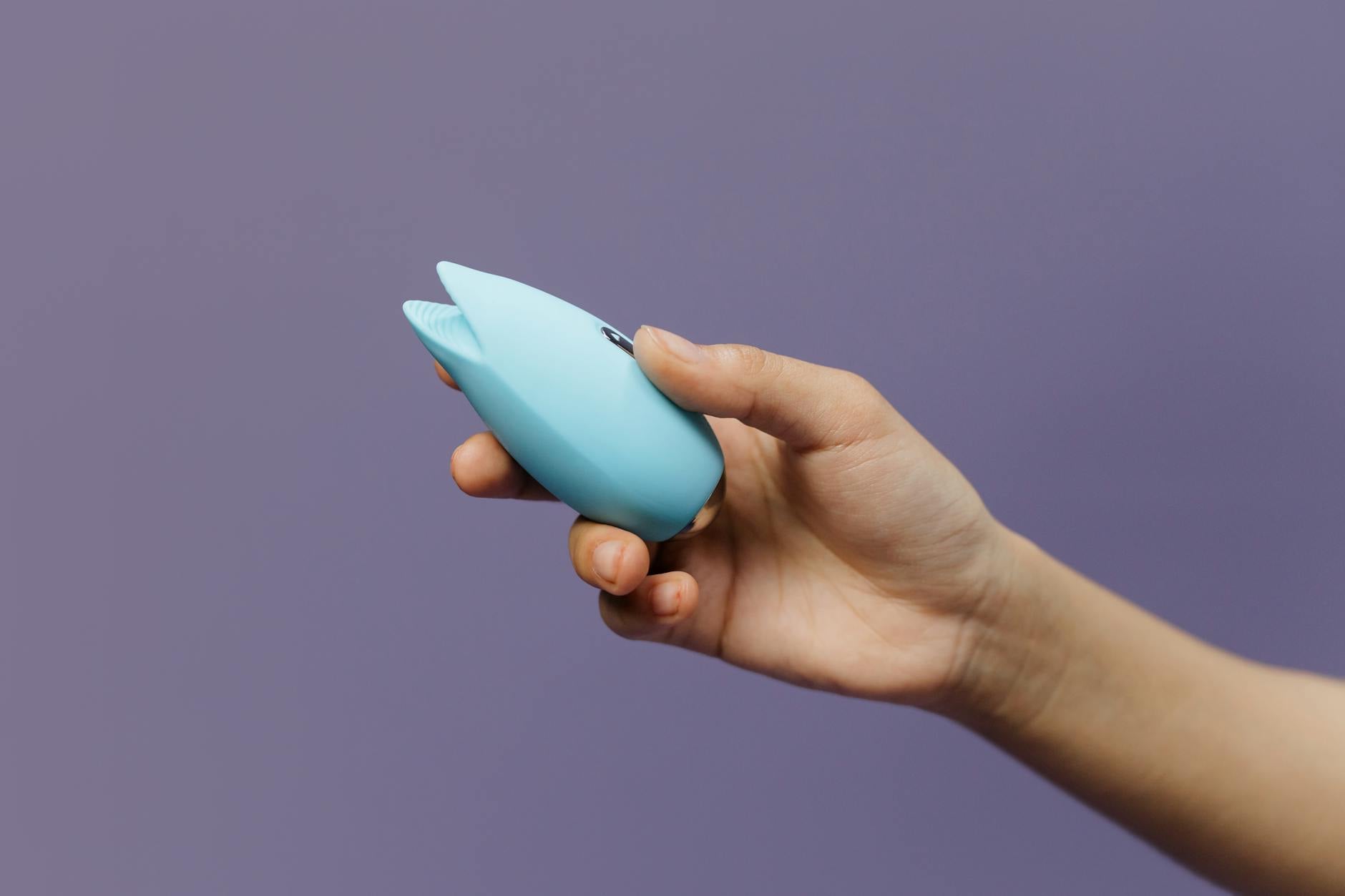
Photo by cottonbro studio on Pexels
The conversation you actually need to have
Instead of asking "Why don't you want me?", try: "I need to feel connected sexually. That matters to me. Here's what I'm thinking about how we can both get what we need."
Instead of "You're always pushing for sex", try: "I've been feeling pressured. I'd like to figure out a way that works for both of us."
These sentences separate the person from the problem. You're not enemies. You're partners trying to solve a logistics question.
Then introduce the tool. "I've been thinking about using a clitoral vibrator for myself on days when we're not partnering. I thought it might take some pressure off both of us. What do you think?" Some partners will be relieved. Some will need reassurance that it's not a replacement. Some will eventually want to participate. All of those responses are okay.
When desire mismatch signals something deeper
Sometimes low desire is medical. Hormonal imbalances, medication side effects, undiagnosed depression, chronic pain. If this is a new shift, not a long-standing dynamic, it's worth a doctor's visit. When desire suddenly drops, something physical is often happening.
Sometimes it's relational. If the lower-desire partner feels unsafe, unheard, or disconnected, desire disappears as a symptom. In that case, a lemon vibrator isn't the answer. You need to address the underlying relationship issue first. That might mean couples therapy. That's not a failure. That's how you actually fix it.
But most of the time, desire mismatch is just biology and life stage. Different nervous systems. Different stress loads. Different hormones. And in those cases, you're not trying to change anyone. You're building a system that honors both people's reality.
The small shift that matters
One partner having agency over their own pleasure changes the dynamic in ways that feel invisible until they're not. Resentment softens. Pressure lifts. And paradoxically, partnered sex often improves because it's happening from desire, not obligation.
A lemon clitoral vibrator isn't a fix for desire mismatch. But it is a tool that lets you stop fighting about the mismatch and start building around it instead.
People also ask
Can using a vibrator alone make my partner feel replaced?
Only if you frame it that way. If you're using it because you're secretly angry at your partner or because you've given up on your partnership, yeah, it might feel like avoidance. But if you're using it as a way to take pressure off both of you and maintain your own well-being, that's actually healthy. The key is transparency. Talk about it. Let your partner know this is about managing your own needs, not about them failing you.
How often should the higher-desire partner be having solo pleasure?
Honestly? As often as feels right. There's no "normal." Some people use a clitoral vibrator twice a week. Some use it daily. The point isn't frequency. It's that you're not waiting around for permission or availability. If you're using solo pleasure to avoid your partner entirely, that's a sign you need to address what's actually broken in the relationship. But if you're using it as one part of a healthy sexual life, go ahead.
What if my partner is uncomfortable with me using a lemon vibrator?
That discomfort usually comes from fear, not actual concern. Fear that you're not attracted to them anymore. Fear that they're being replaced. Fear that something is wrong. Have that conversation directly. "What are you worried about?" Then address the actual fear, not the surface objection. Often, once the fear is named and worked through, the discomfort dissolves.
Should we be using a clitoral vibrator together if we have desire mismatch?
Maybe. Some couples find that a lemon vibrator can actually bridge the gap because it takes pressure off the lower-desire partner to perform. They can be present while you're in charge of your own pleasure. For some couples, that's genuinely connecting. For others, partnered sex and solo pleasure are separate categories. There's no right answer. You get to figure out what feels right for you both.
Is desire mismatch a sign the relationship isn't working?
No. It's a sign that you're two different people with different needs. That's not a failure. That's reality. Most long-term couples experience desire mismatch at some point. Some periods of life naturally lower desire for one or both partners. The question isn't "How do we make this go away?" It's "How do we work with this?"
Can couples therapy help with desire mismatch?
Absolutely. A good couples therapist helps you separate the person from the problem, rebuild communication around sex, and figure out what's actually driving the mismatch. Sometimes it's relational. Sometimes it's medical. Sometimes it's just life stress. A therapist helps you figure out which, and then you address the root cause instead of fighting about the symptom.
The real solution
Desire mismatch isn't something you fix. It's something you design around. When both partners have agency over their own pleasure, and when you can talk openly about what you each need, the pressure dissolves. Partnered sex becomes something you both want to do, not something one person is waiting for and the other is avoiding.
That's when intimacy actually improves. Not because the mismatch goes away, but because you stop fighting about it and start building something that works for both of you.
If you're navigating this right now, you're not broken. Your relationship isn't failing. You're just two people figuring out how to honor both people's reality. That's actually the hard work of a real partnership. And it's worth doing.