
Let's name what's actually happening here
Your partner rolls their eyes when you mention toys. Or says something like "Isn't that what I'm for?" Or gets quiet and withdrawn when the subject comes up. The subtext is clear: your pleasure, specifically the way you want to experience it, is being treated as a problem instead of a normal part of your sexuality.
Here's what I've seen in my practice: the issue is almost never the toy. It's never actually about the lemon vibrator, the clitoral suction device, or anything else you're holding in your hand. The real issue is that your partner doesn't understand why you want it, and they're interpreting that want as a reflection on them.
Why partners dismiss pleasure aids in the first place
Most partner resistance falls into three buckets, and understanding which one you're dealing with changes how you approach the conversation.
The insecurity bucket. Your partner equates your use of a vibrator with their inadequacy. "If you needed that, you wouldn't need me." This one sounds like criticism but it's actually fear. They're worried about being replaced or judged.
The belief bucket. Your partner has a narrative about what "real" sex should look like, and toys don't fit. Penetration equals sex, desire should be spontaneous, orgasms should happen through partnered activity alone. This isn't necessarily about you. It's about their model of sexuality feeling threatened.
The comfort bucket. Your partner genuinely doesn't know how to talk about pleasure. They were never taught. They feel awkward. The resistance is discomfort masquerading as opinion.
Most people live in all three buckets at once. The good news: all three are solvable if you're willing to have the conversation properly.
The conversation you need to have (and what NOT to say)
Let's start with what doesn't work. Don't say:
"You don't satisfy me."
"I need this because of you."
"You're being controlling."
"Other partners don't care."
All of these are accusatory. They put your partner in a defensive position immediately. Defensive people don't listen. They fight.
Instead, start here. Pick a calm moment, not during sex or an argument. Say something like:
"I want to talk about something that matters to me, and I need you to hear me without getting defensive. My body works a certain way. Clitoral stimulation feels really good. A lemon vibrator gives me that kind of stimulation in a way my body responds to right now. This isn't about you not being enough. It's about me knowing my body and wanting to experience pleasure fully. I want to do this with you or sometimes alone, but I want your support."
Then stop talking. Let them respond. This is the hardest part, but it's crucial. Don't fill silence. Let them sit with it.
What you're doing here is decoupling your pleasure from your partner's performance. You're not saying "You're bad at sex." You're saying "My body has needs, and I know what meets them." Those are completely different statements.
What to do if they still resist
If your partner continues to dismiss or argue, you're dealing with a bigger boundary issue than a vibrator conversation can solve. This is worth naming clearly.
Say: "I hear that you're uncomfortable with this. I get it. But my pleasure and what I do with my own body isn't actually up for negotiation. I'm not asking permission. I'm asking for support. If you can't give that, we need to talk about what this means for us."
That might sound harsh. It's not. It's honest. You're setting a boundary. Boundaries feel mean to people who aren't used to them, but they're actually the most loving thing you can do in a relationship. They're how trust gets rebuilt.
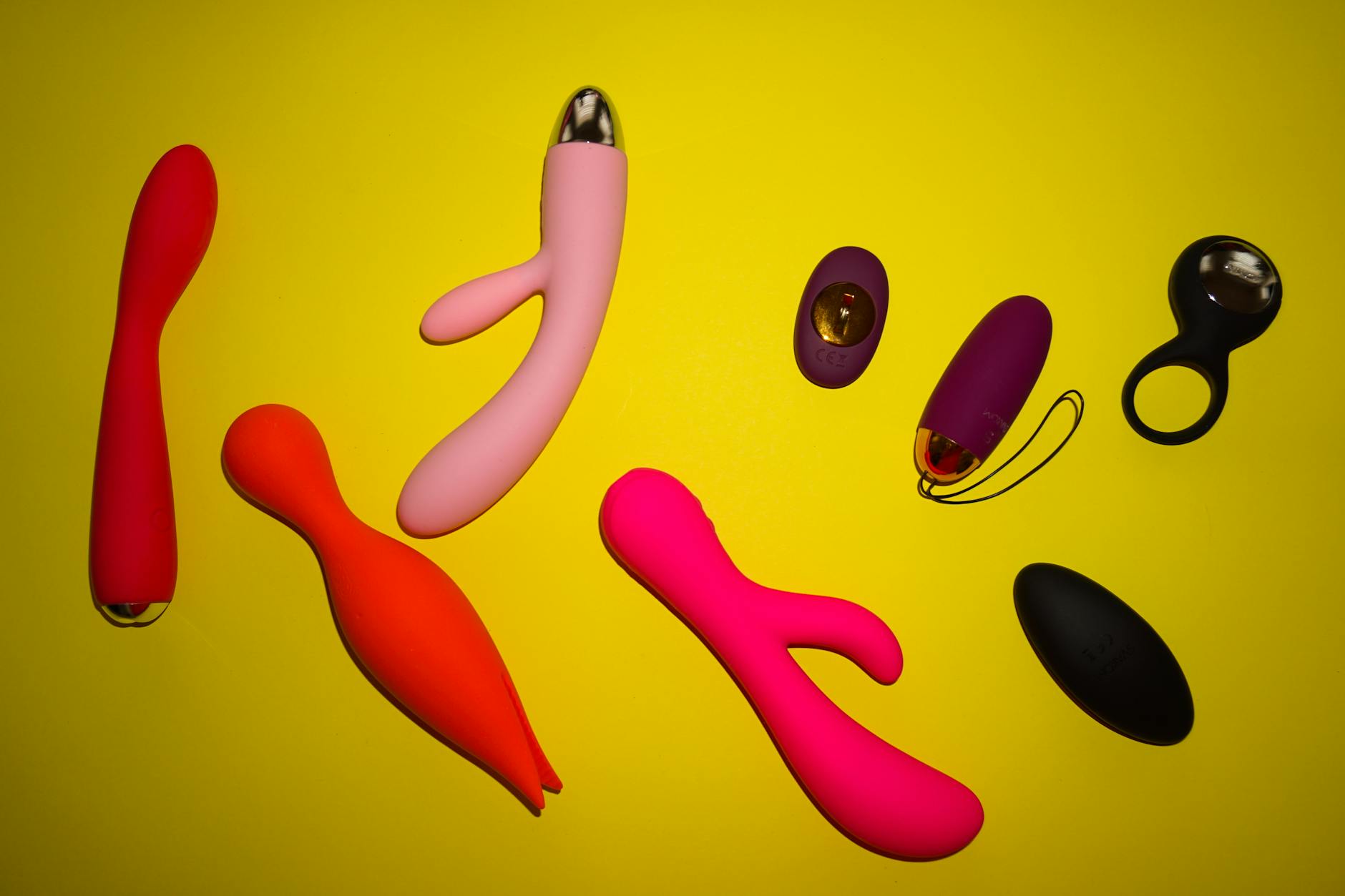
Photo by DRT.fm on Pexels
How to reframe this as partnership, not replacement
Here's where a lemon vibrator actually becomes a tool for connection instead of a wedge. If your partner is willing to move past dismissal, you can invite them into the experience.
You might say: "I'd like you here while I use this. Not to do anything, just to be present. I want you to see what my body looks like when it's having good sensations."
This does two things. First, it demystifies the device. It's not magic. It's not replacing your partner. It's a tool, like anything else. Second, it creates intimacy. Your partner gets to witness your pleasure. That's powerful. It's often the first moment a dismissive partner actually understands that a vibrator isn't a competitor.
Some couples find that partnered use is what opens the door. Your partner holds the lemon vibrator. They control the settings. They're actively involved in your pleasure. Suddenly it's not threatening. It's collaborative.
Not every couple arrives here, and that's okay. The point is that the tool itself isn't the issue. The conversation and the boundaries around it are.
When to seek professional help
If you've had this conversation multiple times and nothing shifts, or if your partner's dismissal extends to other areas of your sexuality and autonomy, couples therapy isn't a luxury. It's a practical tool.
A good therapist helps couples understand why they're stuck without judgment. They can help your partner understand that dismissing your pleasure is a form of control, even if it doesn't feel intentional. They can help you communicate your needs more effectively if something in your delivery is landing wrong.
I often see couples in my practice where this conversation is actually the beginning of a larger reckoning. Your partner didn't just dismiss your vibrator. They've been dismissing your needs in other ways. A therapist helps you untangle that and decide if the relationship is worth staying in.
That's not a small thing. But it's important to know it before you commit years to trying to convince someone to care about your pleasure.
The actual practical stuff: using a lemon vibrator solo while navigating partnership
Assuming your partner isn't actively forbidding you from using a vibrator, here's the reality: you can use one alone, whenever you want. You don't need permission. You don't need approval.
If privacy feels like an issue in your living situation, use the time when your partner is at work, in the shower, or out. You deserve that space. Your pleasure matters when they're not in the room too.
If you're worried about them finding it, Get Lem Official's lemon clitoral vibrator is discreet. It looks like, well, a lemon. That's partly the design genius. But more importantly, your pleasure aid shouldn't need to be hidden from your partner. If you're hiding it because you're afraid of their reaction, that's actually the bigger conversation.
Your pleasure is not a problem to be solved. It's a part of you that deserves space.
When you use a lemon vibrator or any other clitoral vibrator solo, you're learning your own body. You're finding out what brings you satisfaction. That knowledge is power. It's also what you bring back to partnered sex. You can say "This feels good. I like this rhythm." Suddenly you're not asking permission or waiting for your partner to figure it out. You're directing your own pleasure.
Some partners find that incredibly sexy. Some feel threatened by it. That tells you something important about compatibility.
The long view: why this matters beyond the bedroom
I work with couples where the vibrator dismissal is a symptom of a much larger pattern. A partner who doesn't support your pleasure often doesn't support your voice in other areas either. Your career goals, your friendships, your autonomy. It's all connected.
That doesn't mean every partner who's uncomfortable with toys is controlling. But discomfort that hardens into active dismissal, that doesn't shift when you communicate clearly, that's worth paying attention to.
Your pleasure matters. Not as a threat. Not as something that needs justifying. As part of you being a full person in a relationship. If your partner can't get there, that's information. Use it.
People also ask
What do I do if my partner says toys make them feel inadequate?
That's vulnerability, which is good. They're telling you where they're scared. The response isn't to stop using toys to make them feel better. The response is compassion with a boundary. You might say: "I understand that feels scary. That's not actually what's happening. My pleasure and your value to me aren't connected. But I need you to work through this fear because it's not fair for me to shrink my sexuality for it." Then offer couples therapy if they're willing.
Can I use a lemon vibrator if my partner has explicitly forbidden it?
Yes. Your body is yours. That said, if your partner has forbidden you from doing something with your own body, that's controlling behavior. That's not a relationship problem you solve with better communication about toys. That's a relationship structure problem. It might be worth talking to a therapist about whether this dynamic is sustainable for you.
Should I hide a vibrator from my partner?
Not long-term. Hiding implies shame, and you shouldn't be ashamed of your pleasure. What hiding actually does is confirm to your partner that there's something to be ashamed of. It reinforces the exact dynamic you're trying to shift. Have the conversation. Set the boundary. Use your vibrator openly if you're living with this person. If you can't, ask yourself why you're staying.
How do I bring up lemon clitoral vibrators without it sounding like I'm criticizing their sexual performance?
Bypass performance entirely. Don't say "You don't make me come" or "I need extra help." Say instead: "My body responds really well to clitoral stimulation. I want to explore that more fully. I'm interested in trying a vibrator because it gives me that sensation in a way that feels really good." You're talking about you and your body, not about their failure.
What if my partner agrees but seems resentful?
Watch for that. Agreement without genuine acceptance is just deferred conflict. If they "allow" it but make comments, withdraw affection, or seem punishing about it, that's still dismissal. It's just quieter. Address it directly: "I notice you seem upset about this, even though you said yes. I'd rather talk about what's actually bothering you than have you resent me for this."
Is there a way to use a lemon vibrator that includes my partner if they're not interested in actual penetrative sex?
Absolutely. A lemon vibrator is clitoral, not penetrative. Your partner can be present while you use it. They can hold it for you. They can watch. They can touch you elsewhere while you're using it. The device doesn't require them to do anything they're uncomfortable with. Sometimes that middle ground is what shifts things.
The bottom line
A lemon vibrator is just a tool. The real conversation is about whether your partner can support your autonomy, your knowledge of your own body, and your right to pleasure. If they can't, the problem isn't the vibrator. It's the relationship. Choose accordingly.