Here's what nobody tells you about desire mismatch
One partner wants sex three times a week. The other wants it once every two weeks, maybe. Nothing is wrong with either person. But the tension? That's real, and it's wearing both of you down in ways that have nothing to do with horniness.
The partner with lower desire starts avoiding intimacy altogether because sex has become a negotiation. The partner with higher desire feels rejected, which kills their own arousal over time. You end up in a loop where lower desire becomes even lower because the whole thing now feels like pressure.
Why this happens (and why it's not about attraction)
Libido differences rarely signal incompatibility. They signal different stress loads, nervous system states, medication side effects, or plain biological variation. I've worked with hundreds of couples where the lower-desire partner was wildly attracted to their partner but genuinely couldn't access arousal under the current conditions.
Here's what I see most often: the lower-desire partner has higher baseline stress, is carrying more invisible emotional labor, or is touch-fatigued from kids, work, or both. Their body is literally not in parasympathetic mode. Asking them to get aroused is like asking them to fall asleep while standing in a hurricane.
The higher-desire partner, meanwhile, often pursues more initiation to try to bridge the gap. This increases the pressure the lower-desire partner feels, which tanks desire further. You're both trapped.
How a lemon vibrator rewires this dynamic
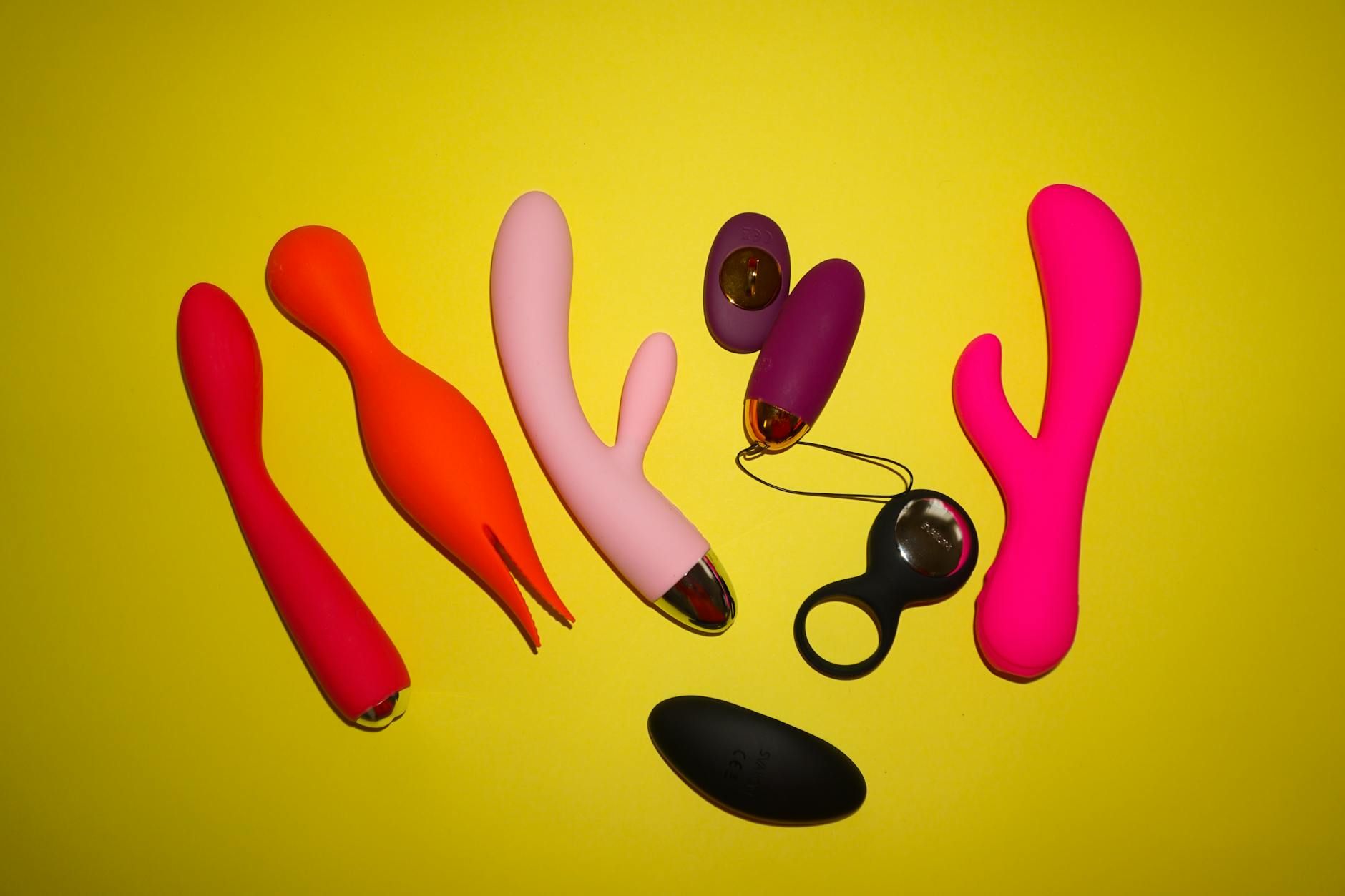
A lemon clitoral vibrator like the Lem changes the equation for the lower-desire partner in a specific way: it removes the performance expectation.
When the lower-desire partner uses a lemon vibrator solo, they're not trying to match someone else's arousal speed. They're not performing. They're not monitoring whether their partner is satisfied. They're just exploring their own body on their own timeline. For many people, this is the first time in years they've experienced pleasure without an invisible clock ticking.
This matters because pleasure without pressure often awakens desire. You can't skip that step. Desire doesn't usually come first. Access to sensation comes first. Pressure kills it instantly.
Here's the version that works for partners: the lower-desire person uses a lemon vibrator during couple's time, but in a way that feels collaborative rather than performed. They're using it for their own sensation, their partner is present and contributing (touching elsewhere, kissing, talking, or just being there), and the whole goal is the lower-desire person's pleasure, not mutual climax or hitting some time target.
The conversation before anything else
Using a lemon vibrator when libidos don't match requires a talk that most couples skip. And that's why the vibrator doesn't help.
The talk needs to separate three things that usually get tangled up. First, there's the fact of the difference itself (he wants more, she wants less). Second, there's the meaning the higher-desire partner is assigning to it ("she doesn't want me"). Third, there's what the lower-desire partner actually needs (less pressure, more space, different conditions).
Start here: "I want us to stay connected. The rhythm we've had isn't working for either of us. Can we talk about what would actually feel good, separate from any expectation?"
Then listen. Really listen. The lower-desire partner might say: "I need you to stop initiating as much. It makes me freeze." Or: "I feel touch-fatigued from the kids by the time we're alone." Or: "I'm stressed about money and my body just shuts down." None of these are about attraction. But they're all actionable.
If you skip this conversation and jump to vibrators, the vibrator just becomes another tool for pressure.
Practical rhythms that actually work
Here are the patterns I see work with lower-desire partners and clitoral vibrators:
The solo approach. The lower-desire partner uses a lemon vibrator twice a week on their own, in a relaxed context. No goal. No partner waiting. They're just reconnecting with their own sensation. This often, within weeks, increases interest in partnered sex because they're less touch-fatigued and more in their body overall. You can't jump straight to couple's time if the lower-desire partner hasn't been able to access pleasure solo first.
The parallel approach. Partners are intimate together, but each is focused on their own pleasure. The lower-desire partner uses a lemon clitoral vibrator on themselves while their partner is present. The higher-desire partner might be using their own toy, or touching the lower-desire partner elsewhere, or just being present. The goal is simultaneous pleasure that doesn't require coordinating arousal speed.
The slow-build approach. Couple's time starts non-sexual. Kissing, touch, no expectation of sex. The lower-desire partner has a lemon vibrator within arm's reach, and if arousal builds, they use it. If it doesn't, that's fine too. The key is removing the invisible finish line. Some nights this builds into sex. Some nights it doesn't. Both are okay.
What the higher-desire partner needs to hear
I work with a lot of higher-desire partners who feel rejected, and I want to be direct with them: your partner using a vibrator isn't them opting out of you. It's them trying to show up in a way that's actually sustainable.
If your lower-desire partner is using a lemon vibrator during intimate time, that's them meeting you. That's them choosing connection even though their natural arousal rhythm is slower. That's worth more than enthusiastic sex that requires you to carry all the desire.
Your job during this phase isn't to make them want you more. It's to make the experience of sex feel like something they want to participate in, not something they have to endure.
That shift usually takes three to four weeks of consistent, lower-pressure intimacy. After that, most couples report that natural desire returns, sometimes from both sides.
The other thing that changes everything
About 40 percent of the couples I work with who struggle with desire mismatch have a second hidden issue: the lower-desire partner doesn't know their own body's arousal map. They don't know what actually turns them on because they've never explored it without performance anxiety.
This is where solo exploration with a lemon clitoral vibrator becomes genuinely transformative. The lower-desire partner isn't just using a toy. They're learning their own arousal language: what sensations build desire, what doesn't, what they actually want versus what they think they should want.
When they come back to partnered sex with that knowledge, everything changes. They can actually tell their partner "this works for me" or "try this instead." The higher-desire partner gets better feedback and feels less like they're fumbling in the dark. Desire mismatch stops being a blame situation and becomes a puzzle you're solving together.
When to get additional support
If you've been trying this for six weeks and nothing has shifted, that's not a sign you need a better vibrator. That's a sign you need to talk to someone who specializes in desire discrepancy. A therapist or sex coach can help you figure out whether this is really about libido, or whether there's unresolved conflict, health stuff, or medication side effects in the way.
Sometimes lower desire is a legitimate signal that something bigger needs attention. A lemon vibrator is useful, but it's not a substitute for addressing actual relationship rupture or physical health factors.
The truth about staying connected
Lower libido doesn't end relationships. Unspoken resentment does. The couples who make it through desire mismatch are the ones who can talk about it without blame, who are willing to adapt, and who remember that sex is one kind of connection, not the only kind.
A lemon vibrator is a practical tool in that adaptation. It can take pressure off the lower-desire partner, give the higher-desire partner something to do other than pursue, and help both of you build pleasure that actually feels sustainable.
But the tool only works if the conversation works first.
People also ask
What if my partner feels threatened by me using a lemon vibrator?
That reaction usually comes from insecurity or a misunderstanding about what the vibrator means. Get curious instead of defensive. Ask: "What are you worried will happen?" Often it's "you'll need me less" or "this means you don't want me." Neither is true. A lemon clitoral vibrator helps lower-desire partners access sensation that makes them more interested in partnered sex, not less. But your partner needs to hear that from you, not assume it. Frame it as "I want to feel more aroused with you, and this helps me get there."
Can we use a lemon vibrator during sex if I'm the lower-desire partner?
Absolutely. Many lower-desire partners find that using a clitoral vibrator during partnered sex makes the experience feel better, faster, and less like they're forcing themselves to climax on someone else's timeline. This often reduces the avoidance that usually happens with desire mismatch. Start with the conversation about it first, so your partner knows it's not rejection.
How long does it take for desire to balance out after starting to use a lemon vibrator?
Typically three to six weeks if you're also doing the relational work (lower pressure, clearer communication, solo exploration). If you're just adding a vibrator without changing the dynamic that killed desire in the first place, nothing shifts. The vibrator is a tool, not a magic solution.
What if the higher-desire partner wants more than the lower-desire partner can ever give?
That's a real compatibility question, and sometimes the answer is that you're actually mismatched in ways a vibrator can't fix. A good therapist can help you figure out whether this is a mismatch you can bridge or a fundamental incompatibility. Wanting different sexual frequencies doesn't automatically mean you can't be together, but both partners have to genuinely accept the compromise, not just tolerate it with resentment.
Does using a lemon vibrator solo mean my partner isn't enough for me?
No. Solo pleasure and partnered pleasure use different parts of your nervous system. One doesn't replace the other. Many people with mismatched libidos find that solo exploration actually increases their interest in partnered intimacy because they're less touch-fatigued and more in their body. It's not about your partner being insufficient. It's about you having space to reconnect with yourself.
Can using a lemon vibrator as the lower-desire partner ever feel like more work?
Yes, if your partner is watching, waiting, or making it feel like another performance. That defeats the purpose. The lower-desire partner's solo time with a lemon vibrator needs to feel like genuine solo time. No pressure, no watching, no expectation that it will lead anywhere. If you're using it during couple's time, that's different, but even then it should feel collaborative, not like you're trying to speed up your arousal to meet them halfway.