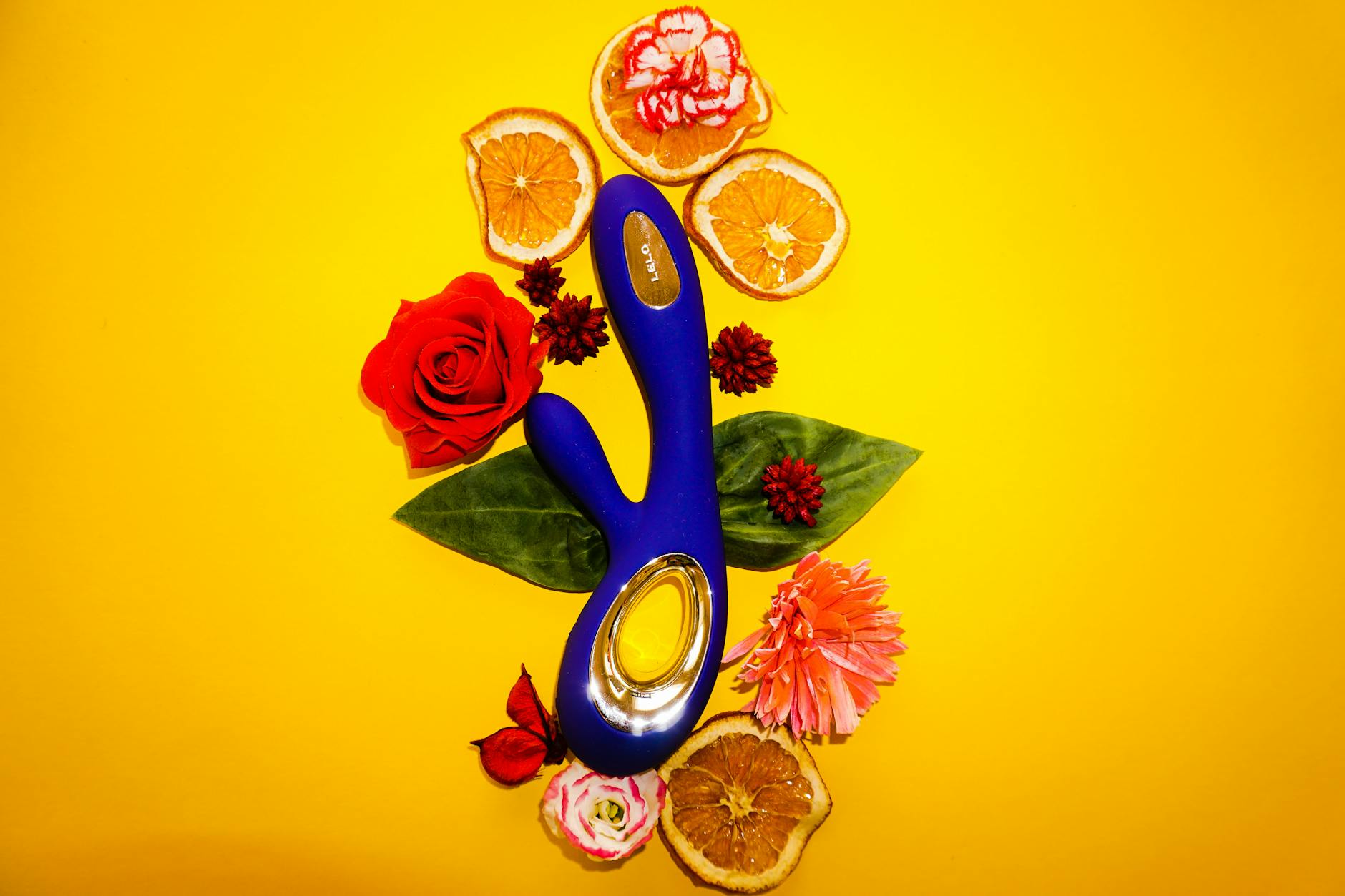
Your clitoris has a cycle. You probably don't know it yet.
Here's the thing: your clitoral sensitivity doesn't stay constant. It shifts across your menstrual cycle in measurable, predictable ways. And if you're using a lemon vibrator or any clitoral vibrator, understanding those shifts changes everything about how you experience pleasure.
I've watched clients discover this pattern and suddenly feel less broken, less confused, more in control. One week the Lem feels perfect at medium intensity. Two weeks later, the same setting feels too much. That's not a sign something's wrong with you. That's biology. And it's actually useful information.
How your cycle affects clitoral sensitivity
Estrogen and testosterone don't just affect your mood or energy. They physically change how sensitive your clitoris is and how quickly arousal builds.
During the follicular phase (days 1-14 of a typical cycle), estrogen is rising. Your clitoral tissue becomes more engorged with blood. Sensation heightens. Arousal builds faster. The clitoris becomes more responsive to stimulation. This is the phase where many people find they can orgasm more easily and intensely.
As you move into ovulation (around day 14), testosterone spikes alongside estrogen. This is often the peak sensitivity window. Direct stimulation feels amazing. Orgasms tend to be stronger.
Then comes the luteal phase (days 15-28). Estrogen drops. Progesterone rises. Your clitoris becomes slightly less engorged. Sensitivity decreases. Arousal takes longer to build. Many people find that what felt perfect last week now feels insufficient or too intense depending on the setting.
The truth: you're not getting less sensitive to your vibrator. Your clitoris is actually responding to hormonal shifts that are completely normal and predictable.
Tracking your sensitivity patterns
Start simple. For one full cycle, note three things:
- What day of your cycle you're in
- Which pattern or intensity setting on your lemon vibrator feels best
- How long arousal takes to build
Use your phone's calendar app. Mark your period start date. Then, during masturbation or partnered sex, jot down: "Day 8, pattern 3 feels perfect," or "Day 21, pattern 1 is better than usual." After one cycle, patterns emerge.
Some people find they're sensitive throughout. Others notice dramatic swings. A few discover they prefer totally different intensity levels depending on the week. None of these is the "right" way. Yours is the right way for your body.
Adjusting your technique across phases
During the follicular phase and ovulation, you might:
- Start at pattern 2 or 3 instead of 1
- Use less warm-up time
- Experiment with faster patterns
- Play with more direct pressure
Arousability is higher. Your body's ready. Lean into that.
During the luteal phase, consider:
- Starting at pattern 1 and building up slowly
- Extending your warm-up to 15-20 minutes
- Using more consistent, sustained patterns instead of pulsing ones
- Applying the Lem with lighter contact initially
Your clitoris hasn't disappeared. It's just asking for patience and a slightly different approach. That's not deprivation. It's attunement.
The suction advantage during low-sensitivity weeks
One reason the Lem works particularly well across cycle phases is the suction mechanism. Unlike vibration alone, suction engages deeper nerve tissue. During weeks when direct vibration feels insufficient, shifting to the Lem's suction patterns can deliver sensation without requiring more intensity on the surface.
If you've been using a standard clitoral vibrator, you might notice the Lem feels gentler during high-sensitivity phases and more effective during low-sensitivity phases. That's by design. Suction distributes stimulation across a larger area of tissue, which often feels just right when your clitoris is less engorged.
What about pain or discomfort?
There's a difference between "less sensitive" and "tender." Some people experience clitoral tenderness during certain cycle phases, usually the luteal phase when hormone levels shift. If your clitoris feels sore or uncomfortable, that's not a signal to push through with your vibrator.
Instead: take a break, use external stimulation only (no penetration or internal pressure), or switch to partnered touch that's gentler and slower. Your body's asking for something different, and listening to that is how you stay connected to your pleasure long-term.
Syncing pleasure with your partner's cycle
If you have a partner and both of you menstruate, your sensitivities might sync or clash at different points in the month. You might find you want more intense stimulation during follicular while your partner is moving into their tender luteal phase.
Talk about it. "I've noticed I'm more responsive mid-cycle" opens a conversation that beats assuming someone's losing interest. You can take turns prioritizing your needs each phase, or find times when your cycles align and you're both in high-sensitivity windows.
If you have a partner who doesn't menstruate, this information helps them understand that your desire or responsiveness changing isn't about them. It's about your body's rhythm. That's actually liberating for both of you.
The confidence piece
Once you understand your cycle, pleasure stops feeling random. You're not broken on the weeks when things feel different. You're not failing if the same settings don't work forever. You're responding to biology in real time.
That knowledge transforms how you use any clitoral vibrator, including the Lem. You move from "Why isn't this working?" to "What does my body need this week?" And that shift alone makes pleasure feel more like power and less like a mystery.
Your body's not inconsistent. It's intelligent. Learning its language is the whole point.
People also ask
Does clitoral sensitivity change the same way for everyone?
No. Some people experience dramatic swings in sensitivity across their cycle. Others notice subtle shifts. A few don't detect much change at all. Hormonal birth control, PCOS, endometriosis, and other conditions can flatten or amplify these patterns. Track your own cycle. Your pattern is the only one that matters.
Can I use my lemon vibrator during my period?
Absolutely. Many people find they're most sensitive during menstruation because blood flow to the clitoris increases. Some prefer stronger patterns during their period. Others find lighter touch feels better. Your period doesn't make the Lem off-limits. It's just another phase with its own preferences.
What if my sensitivity pattern doesn't match the typical cycle phases?
Your body might be responding to factors beyond hormones: stress, sleep, relationship dynamics, medication, illness. Track what you notice alongside your cycle. You might discover your sensitivity dips when you're stressed or sleep-deprived, regardless of cycle day. That's useful information too.
Does hormonal birth control change clitoral sensitivity?
Yes. Birth control stabilizes hormone levels, which often flattens the intensity of sensitivity shifts. If you're on birth control, you might not notice the dramatic swings described here. You might find one intensity setting works consistently. That's not worse or better. It's just different.
Should I tell my partner about my sensitivity shifts?
If you want better sex, yes. This conversation stops being taboo when you frame it as useful data: "I'm more responsive this week," or "I need a slower approach right now." Most partners are relieved to understand why you enjoy something one month and not the next. It's not rejection. It's rhythm.
Can I time sex to my most sensitive days?
If you want to. Some people plan partnered sex around ovulation when arousal peaks. Others prefer the emotional depth of luteal phase sex, even if physical responsiveness is lower. There's no "best" time. There's only what works for your desire, your partner's desire, and your life.
References and sources
For those curious about the science: clitoral engorgement across the menstrual cycle has been documented in studies using ultrasound and Doppler imaging. Research in Archives of Sexual Behavior and Hormones and Behavior shows measurable changes in clitoral blood flow and sensitivity across follicular and luteal phases. The relationship between testosterone, estrogen, and genital sensation is well-established in endocrinology and sexual medicine literature. Your cycle isn't a coincidence. It's measurable, predictable, and worth paying attention to.