
The thing nobody tells you about arousal after forty
It takes longer. That's it. That's the sentence everyone skips over, and it's the one that matters. Not complicated, not sad, not something to fix with a pill. Just slower. And honestly? That changes everything once you stop fighting it.
I work with couples in their forties, fifties, and beyond, and this is the conversation that comes up in almost every session. One partner notices arousal isn't instant anymore. They assume their body is failing them. The other partner wonders if they're no longer attractive. Both spiral. Neither person says it out loud. The gap widens.
Here's what actually happens, and what helps.
Why arousal slows down (and it's not what you think)
Yes, hormones shift. Blood flow changes slightly. Neural response becomes less hair-trigger than it was at twenty-five. But that's maybe thirty percent of the equation. The rest is life.
After forty, your nervous system has absorbed decades of stress, responsibility, and the cumulative weight of being a grown-up. Your brain is managing a mortgage, a job, aging parents, relationship history, body changes. All that cognitive load doesn't just disappear when you close the bedroom door. It sits in the background, asking small questions: "Is the door locked? Do I have time? Am I doing this right?" None of those questions are arousal.
There's also this: you're less desperate. At twenty, arousal felt urgent and uncomplicated. After forty, you've had enough sex to know the difference between genuine desire and going through the motions. Your body won't let you fake it anymore. Which sounds terrible until you realize it means your arousal, when it comes, is real.
What changes and what doesn't
Your capacity for pleasure stays intact. Your ability to orgasm stays intact. What changes is the ramp. The on-switch takes longer to find.
Here's what I tell my clients: think of arousal as a dial instead of a button. At twenty, the dial was sensitive. You could nudge it and get movement. After forty, the dial is the same dial. You're just standing a bit further from it. You need to turn it more deliberately, and you need more time before you hit the frequency that feels good.
That's where a lemon vibrator becomes less of a "toy" and more of a translation tool. Instead of your body needing to work harder to create sensation, the vibrator meets you halfway. You're not trying to feel something that isn't there. You're amplifying what's already possible.
Why lemon clitoral vibrators work particularly well after forty
Lemon vibrators, like the Lem, use suction and pulsing patterns instead of straight vibration. That matters after forty because it doesn't require the same level of natural blood flow to feel effective.
After menopause or as testosterone naturally declines, blood flow to the clitoris can be less instant. A traditional vibrator relies on friction and requires tissue that's already somewhat engorged to feel great. A lemon sucker works differently. It creates pressure changes that stimulate the clitoral complex without needing that preliminary blood rush. You can start using it even during the warm-up phase, and it actually helps the warm-up happen faster.
Most of my clients over forty tell me the same thing: they get aroused in thirty minutes with a lemon vibrator instead of forty-five to sixty. That's not because they're broken or numb. It's because they're using a tool designed for how their body actually works now.
How to integrate a lemon vibrator into longer arousal
The first shift is permission. Longer arousal isn't an obstacle. It's foreplay. Call it that in your head. Call it that out loud if you're with a partner.
Here's what I recommend:
Start earlier than you think. If you used to need ten minutes of touch before things felt good, budget twenty-five now. Build in time for conversation, for your nervous system to actually downshift, for mental space to open up. A lemon vibrator can come in at minute ten or fifteen, not minute one. Let the warm-up actually warm you up.
Use it during the process, not as a finish line. Many people treat a vibrator like it's the thing that ends the story. Instead, use it to help arousal build. Start on a lower setting (the Lem has gentle patterns that pair well with foreplay), let sensation accumulate, then adjust as you go. Think of it as part of the rhythm, not the destination.
Give yourself permission to come back. If arousal drops midway, that's not failure. It means something shifted your attention. A lemon clitoral vibrator is faster to re-engage with than starting from zero. Use it to gently remind your body where you were going.
Talk about what's happening. If you're with a partner, narrate. "I need a few more minutes of touch before this feels great." "This pattern is working for me right now." Partners often think the slowness is rejection. Talking about the slowness as a normal fact makes space for both people to relax.
What changes in sensitivity (and what doesn't)
Clitoral sensitivity doesn't disappear after forty. It becomes more specific. You might notice that what felt amazing at thirty now feels slightly too intense, or conversely, requires a firmer touch. That's not loss. That's precision.
A lemon vibrator gives you options. Different patterns, different intensities, the ability to move it in ways that a partner's hand might not. After forty, that flexibility often feels better than a single approach that worked for decades.
Many of my clients also report that their orgasms change. Sometimes they're more localized. Sometimes they take longer to build but feel more intense when they arrive. The sensation profile of pleasure shifts, and that's not bad. It's just different. A vibrator that lets you experiment with different patterns helps you explore what the new normal actually feels like.
The role of stress and attention
Honestly though, this is the part I focus on most in my practice: by forty, you've developed good nervous systems at managing stressors. You also might have forgotten how to put that system in park.
Slower arousal after forty often means your sympathetic nervous system (fight or flight) is still running. Your parasympathetic nervous system (rest and digest) hasn't fully switched on. A lemon vibrator can't fix that directly, but it can create a feedback loop that helps. Sensation itself can be grounding. The repetitive pattern of a vibrator can be almost meditative. Some of my clients use a lemon clitoral vibrator not just for pleasure, but because the physical sensation helps their body recognize it's safe to drop into arousal.
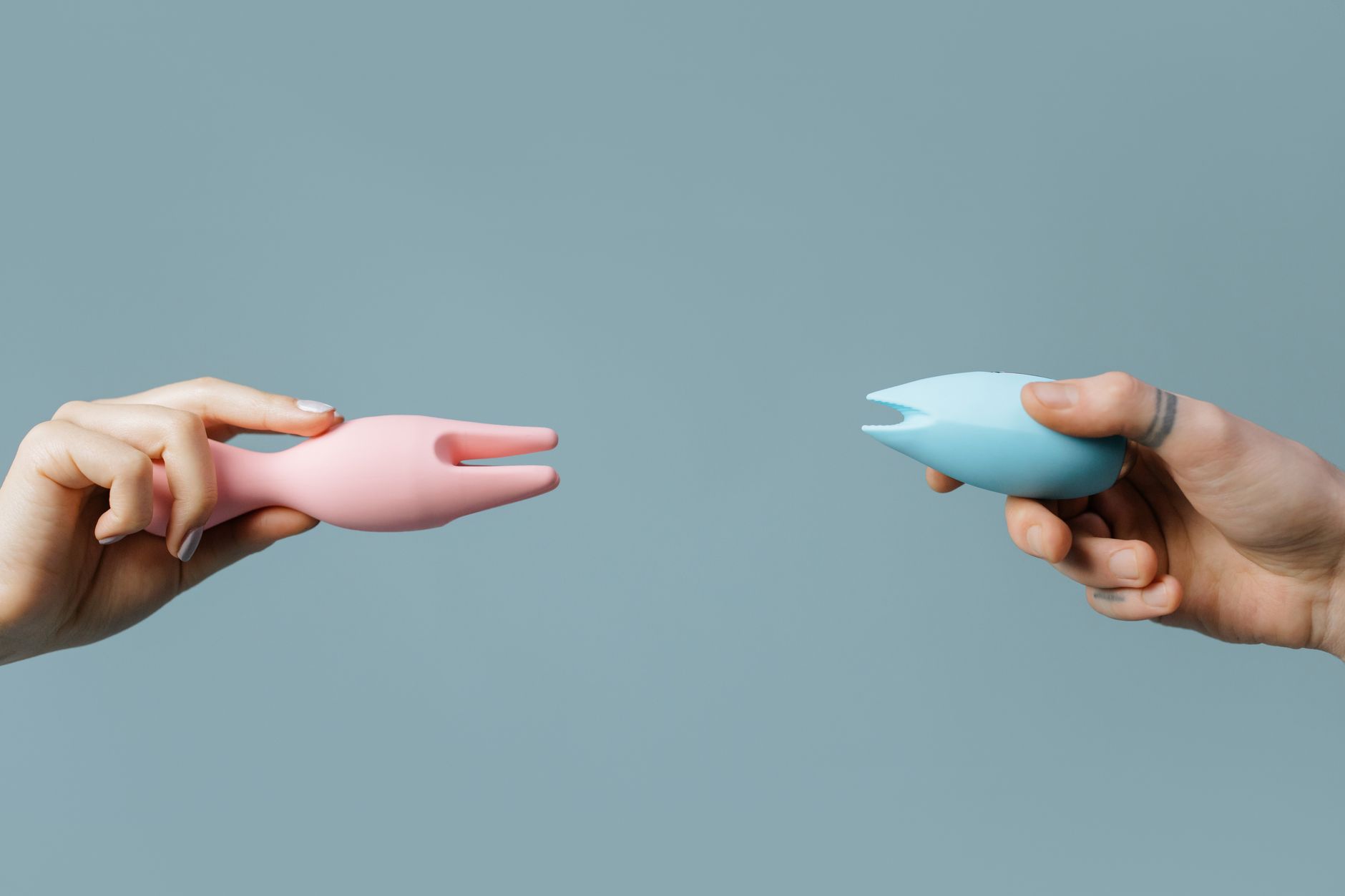
Photo by cottonbro studio on Pexels
If you're partnered, this is a conversation starter
One of the most useful shifts I see in couples' sex lives after forty is when both people stop assuming they know what the other person needs. Arousal slowing down is actually an opportunity to get curious again.
Instead of "why is this taking so long," try "what would actually feel good right now." Instead of approaching the same way you always have, try asking your partner where they want to start. A lemon vibrator can be part of that conversation. It's not a replacement for a partner's touch. It's an expansion of what's possible.
If you're single, a lemon vibrator is even more straightforward. You're not negotiating anyone else's timeline. You can take however long your body needs. That's actually pretty liberating.
The bigger picture: arousal after forty is deeper
I say this to couples often: sex after forty is generally better. You know your body. You're less self-conscious. You're more honest about what you actually want. The only thing that gets in the way is treating slower arousal like a failure instead of a feature.
Using a lemon clitoral vibrator isn't about fixing yourself. It's about working with how your body has evolved. Your arousal isn't broken. It's just been rewritten. And honestly, the new story is often more interesting.
FAQ: Arousal and Lemon Vibrators After Forty
How much slower does arousal actually get after forty?
It varies widely. Some people notice a shift in their late thirties. Others don't feel it until their fifties or sixties. On average, the warm-up phase extends by ten to twenty minutes compared to earlier in life. But this isn't universal. Some of my clients tell me their arousal got faster once they stopped worrying about what it should be.
Does a lemon vibrator actually help arousal happen faster?
It helps it happen more easily, which often feels like faster. Because suction-based vibrators don't require as much preliminary blood flow to feel effective, they can work during the warm-up phase rather than only after arousal has already started building. Many people report that the sensations from a lemon clitoral vibrator actually trigger the nervous system to shift into parasympathetic mode, which is where arousal lives.
If arousal takes longer, does that mean I should give up on spontaneous sex?
Not at all, but redefine what "spontaneous" means. Instead of assuming sex happens in ten minutes, you might say "let's be intimate tonight" and give yourselves an hour. That's still spontaneous. It's just honest about what your body actually needs. Many couples find that intentional time is better anyway because both people are actually present instead of rushing.
Is slower arousal after forty a sign of a relationship problem?
No. It's a sign that you're both aging, which is the only alternative to not aging. That said, relationship disconnection can definitely make arousal slower. If arousal slowed down alongside emotional distance, that's worth addressing separately. But if everything else feels connected and only the pace changed, that's just normal. This is actually why that conversation with a partner matters so much.
Can a lemon vibrator help if I'm having trouble staying aroused, not just getting there?
Yes, in a different way. If arousal starts to fade midway through sex, a vibrator can serve as a "re-engagement tool." Instead of the whole experience starting over, you can use it to remind your body where it was going. That's particularly useful after forty when attention span is more fragile and life stress can interrupt things more easily.
Will using a lemon vibrator make my body dependent on it for arousal?
No. This is a common worry and it's not how bodies work. Using a vibrator is like wearing glasses. Your eyes don't become dependent on glasses. They just work better with them. A lemon clitoral vibrator is a tool that makes sensation easier to access. It doesn't replace your natural capacity. If anything, many people find that once they experience arousal more easily with a vibrator, they recognize what arousal actually feels like again, and the gap between natural arousal and vibrator-assisted arousal closes over time.
The thing I want you to actually remember
Slower arousal after forty isn't a flaw. It's information. Your body is telling you that it needs more time, more intentionality, or more specific kinds of stimulation than it used to. That's not degradation. That's expertise.
Using a lemon vibrator in that context is just meeting your actual self where you are instead of trying to function like your twenty-five-year-old self. And honestly, that's where the best sex after forty actually happens.
If you're ready to explore how a lemon clitoral vibrator might fit into your pleasure practice, start with curiosity instead of expectation. Try different settings. Notice what your body responds to. You're not trying to go back to how it used to work. You're discovering how it works now. And that's worth taking time for.