Let's talk about what anxiety actually does to arousal
Anxiety doesn't just kill the mood. It hijacks your nervous system and locks the door to pleasure before you even realize what happened. Your body is flooded with cortisol and adrenaline, your pelvic floor clenches, your blood vessels constrict, and your brain's pleasure centers go offline. It's not a choice. It's biology.
Here's what makes it worse: the moment you notice arousal isn't happening, you get anxious about the anxiety. Then you're stuck in a loop that gets harder to break the longer you stay there.
The gap between what you want and what your body will allow
Most people assume the fix is simple. Relax more. Stop thinking. Try harder. But that's like asking someone with the flu to just walk it off. The nervous system doesn't respond to willpower when it's genuinely dysregulated.
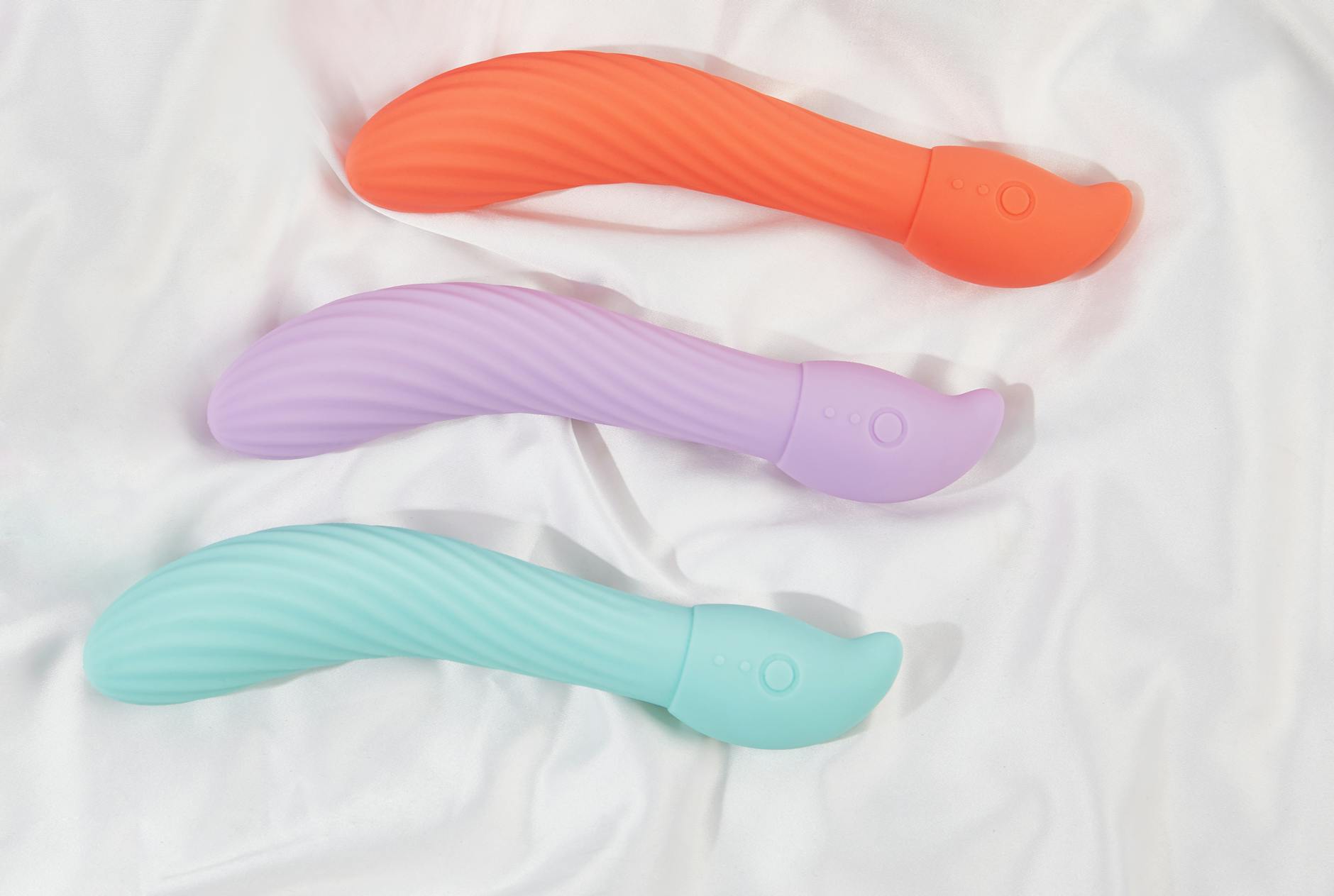
This is where a lemon clitoral vibrator changes things. Not because vibration is magic, but because it works within the neurobiology of your anxiety response instead of fighting against it.
How vibration interrupts the anxiety loop
When you use a lemon vibrator, you're sending a steady, predictable sensory signal to your nervous system. That signal has to be processed before your brain can keep cycling through worry thoughts. It's like tuning a radio to a stronger station. The anxious frequency doesn't disappear, but it gets drowned out.
The rhythm also matters. A consistent pulse (like the patterns on the Lem vibrator) activates your parasympathetic nervous system, the one responsible for rest and recovery. Your body literally can't be in full fight-or-flight and full relaxation simultaneously. The vibration tips the scale.
Third, clitoral stimulation increases blood flow to the vulva, which means more oxygen and more physical sensation. When your mind is preoccupied, your body feels disconnected. Targeted stimulation anchors you back into physical sensation and away from the thought spiral.
Setting up your environment for nervous system success
Technically, you can use a clitoral vibrator anywhere. Realistically, anxiety needs different conditions than desire does.
Start here: choose a space where you actually feel safe. Not "objectively safe," but subjectively safe to you. That might be your bedroom at 9 p.m. with your phone on silent. It might be a locked bathroom with white noise running. It might be a time when you know your partner won't interrupt or your roommate won't knock. The specifics don't matter. What matters is that your nervous system believes it can relax.
Second, give yourself permission to do this for no reason other than nervous system regulation. You're not trying to have an orgasm. You're not trying to prove anything. You're literally just sitting with a tool that helps your body remember how to feel good. That reframe alone reduces the performance pressure that fuels the anxiety loop.
Third, build in a buffer before and after. Spend 10 minutes doing something genuinely calming beforehand. Not meditation if meditation stresses you out. Not breathing exercises if they make you hyperaware of your chest. I mean something that actually settles your nervous system for you. A warm shower, a favorite song, scrolling through something that makes you laugh, whatever works.
Starting with the lemon vibrator when anxiety is present
Don't start on high intensity. That floods your nervous system with input when it's already overwhelmed.
Begin with the lowest setting, ideally one that you can barely feel. Place the Lem against your clitoris and let it stay still for 30 seconds before you move it. Your job is to notice sensation, not chase it. If your mind spins off into "this isn't working" or "I'm doing this wrong," that's anxiety talking. Notice it without fighting it, and return your attention to the physical feeling.
After a few minutes on the lowest setting, move to pattern 2 or 3. Again, stay there for a few minutes. The goal is to spend 10 to 15 minutes exploring sensation at low intensity, without the pressure of orgasm looming.
Here's what often happens: arousal starts building, but quietly. Not the intense, urgent kind you might associate with desire. More like a warm loosening of tension. That's your nervous system downshifting. That counts.
When your mind won't stop spinning during use
If your brain stays caught in anxious thoughts even with the vibrator, you're not failing. Your nervous system just needs more support.
Try adding a grounding technique. Press your feet firmly into the ground or the bed. Feel the weight of your body. Notice five things you can see without moving. These aren't fluffy wellness tricks. They're neurobiological anchors that give your prefrontal cortex something concrete to process, which interrupts the anxiety loop.
You can also layer in a small change to your environment. A scent you like. A texture you find soothing. The sound of rain or waves in the background. These inputs essentially give your nervous system competing stimuli, and often the sensory richness of the environment wins out against the anxiety thought spiral.
If you're using the lemon vibrator with a partner, communicate beforehand. Tell them you're regulating your nervous system, not initiating anything. Sometimes partners misread the signal and escalate, which triggers more anxiety. A simple "I'm doing my own thing here, I'll tell you if that changes" removes that layer of pressure.
Why consistency matters more than intensity
You won't rewire your nervous system in one session. But if you use a lemon clitoral vibrator twice a week for four weeks in this low-pressure, low-intensity way, your body starts to learn: stimulation plus safety equals pleasure is possible.
That's the real work. Your nervous system has learned to associate arousal with threat. It's protecting you. The lemon vibrator, paired with a safe environment and zero performance pressure, teaches it a new association.
Some people notice changes in two weeks. Others take eight. The timeline depends on how much anxiety has been shaping your sexual experience and how consistently you create these conditions.
When to bring a partner into this practice
If you're in a relationship and your anxiety is affecting partnered sex, there's a moment when this solo practice transitions to couple work.
Once you've spent a few weeks using the lemon vibrator alone and your arousal has started moving more easily, you can invite your partner to be present in a low-stakes way. Not touching you, not initiating sex. Just sitting near you, maybe reading or doing their own thing, while you use the vibrator. This teaches your nervous system: "I can feel pleasure and they can be here at the same time."
That's often the missing piece for people whose anxiety is rooted in performance or fear of judgment. The Lem vibrator becomes the bridge between solo pleasure and shared pleasure.
The distinction between anxiety-related arousal blocks and other causes
If you've tried this approach for six weeks and nothing has shifted, it's worth checking whether something else is at play. Undiagnosed depression often masquerades as anxiety. Hormonal shifts can block arousal independent of mental state. Certain medications (especially some antidepressants) genuinely flatten arousal, and the anxiety is a secondary response to that.
A conversation with a therapist or doctor who understands both sexual health and anxiety is worth having. A lemon vibrator is a powerful tool for nervous system regulation, but it's not a replacement for clinical assessment when something deeper is going on.
Your pleasure deserves support from multiple angles. The lemon vibrator is one of them.
People Also Ask
Can a clitoral vibrator actually help with anxiety symptoms overall, not just during sex?
Yes, partly. The parasympathetic activation from vibration and the release of endorphins during stimulation genuinely do help with nervous system regulation. But a lemon vibrator isn't a substitute for therapy, medication, or other anxiety treatment if you need it. Think of it as one tool in a toolkit, not the whole toolkit. If your anxiety is severe enough to be blocking arousal, you probably benefit from clinical support too.
How do I know if my arousal block is from anxiety or something else?
Anxiety-related arousal blocks usually show a pattern: you feel fine until the moment sex is about to happen, or you get close to arousal and then your mind races with intrusive thoughts. Your body feels disconnected or your mind feels "loud." You might also notice your pelvic floor clenching or your breathing getting shallow. If instead you feel no desire at all regardless of context, or if you feel desire but your body won't respond despite no obvious anxiety, other factors (hormonal, medical, relational) might be at play.
Is it better to use a lemon vibrator or a different type of clitoral vibrator for anxiety?
The Lem's dual-pulse patterns and ergonomic shape make it particularly good for nervous system work because you can stay on low intensity for a long time without fatigue. But honestly, any clitoral vibrator you feel comfortable with works. The brand matters less than consistency, comfort, and having multiple intensity levels so you can start very low.
What if I feel guilty or ashamed using a vibrator while anxious?
That's worth sitting with. Sometimes anxiety about arousal comes tangled up with shame about pleasure itself. If you notice guilt, get curious about it: whose voice is that? What belief is underneath it? You might benefit from therapy focused on sexual shame, because a lemon vibrator can't rewire belief systems, even though it can help your nervous system settle. The two often need to happen together.
How long until I notice my arousal blocks getting better?
Most people notice a small shift in two to three weeks of consistent, low-pressure use. But "better" doesn't always mean "gone." It usually means arousal comes a little faster, the anxiety spiral is a little less intense, or you can access pleasure even when you're mildly anxious. Full resolution sometimes takes months, especially if the anxiety is deeply rooted in past experiences or current relationship dynamics.
Can I use a lemon vibrator if I'm on anxiety medication?
Yes. Some anxiety medications can affect sexual response (particularly SSRIs), but that's a separate issue from whether vibration helps your nervous system. If your medication is flattening arousal, that's a conversation for your prescriber. The vibrator can still help with nervous system regulation even if medication is also in the picture.
The bigger picture
Your nervous system learned to treat arousal as a threat. That's not a character flaw. That's a protective mechanism that made sense given what it was processing. A lemon clitoral vibrator, used consistently in a safe, low-pressure way, helps teach it a new association: pleasure is possible, and you're safe.
That rewiring doesn't happen overnight. But it does happen. Your body wants to feel good. Sometimes it just needs the right conditions and the right tool to remember how.