Let's talk about the guilt first
Here's the thing: most people I work with feel some version of shame around solo pleasure. If you're partnered, there's a sneaky voice saying "shouldn't I want this with them instead?" If you're single, there's pressure to frame masturbation as "filling time" until a partner arrives. If you're anywhere else on the spectrum, there's noise about what you "should" want or "shouldn't" need.
That noise is not truth. That's culture, family messaging, and fear talking.
Solo pleasure is not a consolation prize. It's not practice for "real" sex. It's not something you do because you're lonely or broken. It's a fundamental form of self-knowledge and self-care that belongs entirely to you.
Why solo pleasure actually matters (beyond feeling good)
Let me separate three things that often get tangled together.
First: your body needs to know what it likes. Without solo exploration, you're asking a partner to decode your nervous system in the dark. That's not fair to them, and it's a terrible way to get what you need. When you masturbate regularly, you're building a map of your own pleasure. You learn what intensity works, what patterns make you come fastest, where your mind needs to go. That information is valuable whether you're partnered or not.
Second: solo pleasure is about autonomy, not rejection. If you're in a relationship, masturbating does not mean your partner isn't enough. It means your pleasure is not contingent on someone else's availability, mood, or presence. That's not a sign of distance. That's stability.
Third: consistent orgasms (solo or partnered) affect your nervous system in measurable ways. Regular sexual release lowers cortisol, improves sleep, steadies mood, and strengthens your pelvic floor. You're not indulging when you masturbate. You're maintaining your physical and emotional health.
How a lemon vibrator changes the solo experience
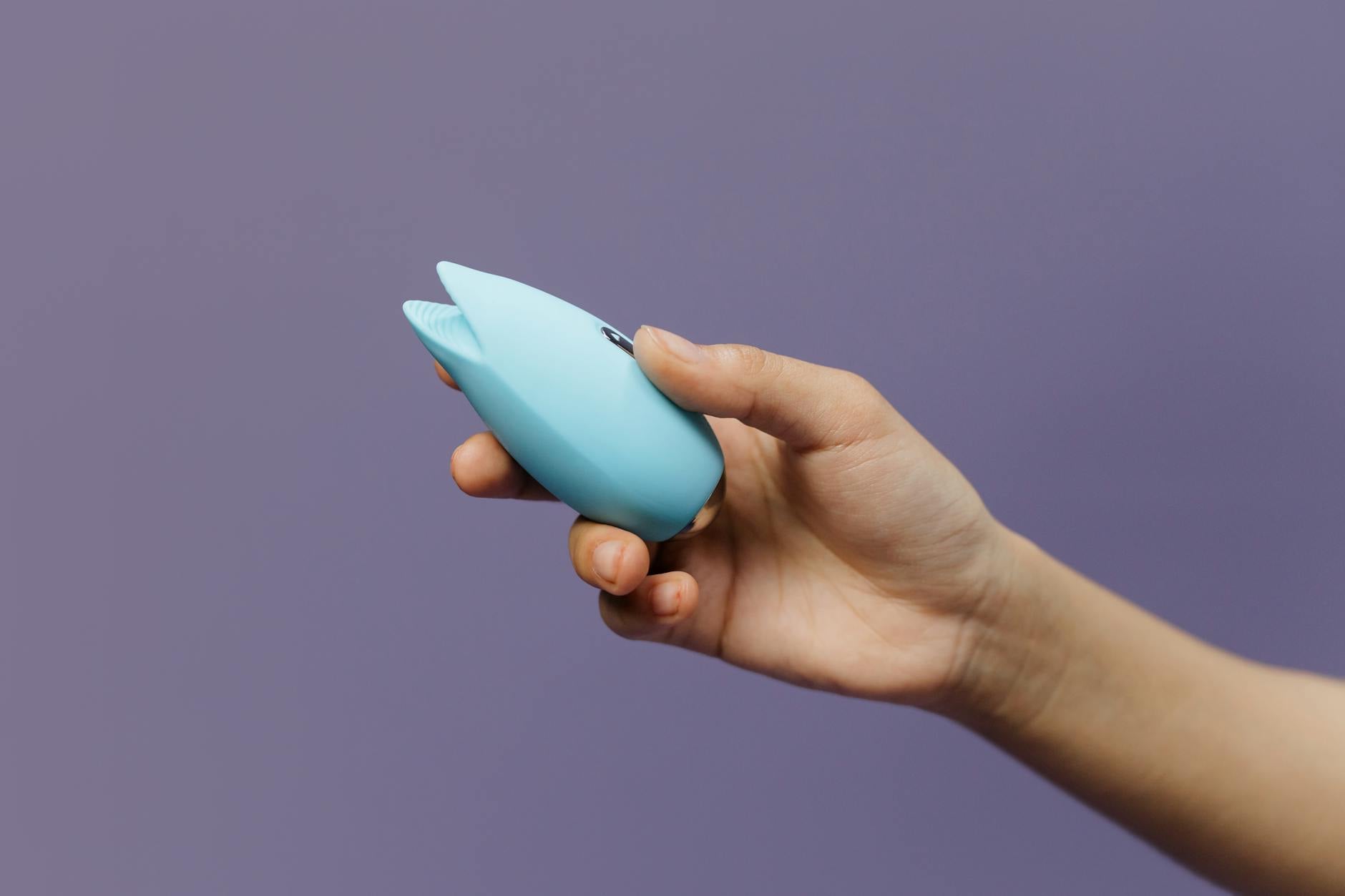
Let's get practical. A lemon clitoral vibrator like the Lem is specifically designed for direct clitoral stimulation using suction and pulsing patterns. When you're alone, this matters because you can focus entirely on what feels good without managing someone else's experience.
Unlike traditional vibrators that rely on friction, a lemon sucker works through gentle suction that stimulates the entire clitoral network. The clitoris has more than 8,000 nerve endings concentrated in the visible glans, but it extends internally as well. A well-designed lemon vibrator reaches more of that network with less direct pressure.
For solo use, this means you can start slow, build intensity gradually, and finish without any physical discomfort. You're in complete control of speed, pressure, and duration. No negotiation, no timing someone else's arousal, no performance element.
The setup: logistics matter more than you think
Solo pleasure requires basic logistics that partnered sex sometimes skips over.
First: time. Block at least 30 minutes. Not because you need that long, but because rushing creates tension that blocks orgasm. Your nervous system needs to downshift out of task mode. If you're checking the clock, you're not fully present. So commit to the time and protect it.
Second: space. This is non-negotiable. You need a place where you won't be interrupted. A locked bedroom, a bath, wherever. If you're always anxious about someone walking in, your body won't relax enough to come. Anxiety is an orgasm blocker. Solve for that first.
Third: devices. Charge your lemon vibrator fully. Keep water-based lubricant nearby. Have a small towel in reach. These are not awkward logistics. These are respect for yourself and your experience.
Fourth: mental space. Put your phone in another room. Close the browser tabs. Tell your brain that this time is for you and nothing else. If intrusive thoughts come (and they will), acknowledge them and come back to sensation. You're not meditating. You're just not also mentally doing your taxes.
Using your lemon vibrator: a basic rhythm
Here's a structure that works for most bodies, but adapt it to yours.
Start with a few minutes of manual touch. Yes, even with a vibrator nearby. Let your hand explore without rushing to the device. Notice where you have sensation, what makes you curious, where you slow down. This foreplay with yourself is not wasted time. It's arousal building.
Once you feel initial warmth and moisture, introduce the lemon vibrator at the lowest intensity setting. Apply it gently to the outer labia first, not directly on the clitoral glans. The Lem's suction will draw the hood and surrounding tissue in, creating stimulation without harsh pressure.
Listen to your body. If it feels good, stay there for 30 seconds to a minute. If it feels numb or uncomfortable, adjust angle or intensity. Move slightly. You're looking for the exact spot and rhythm that creates a chain reaction of sensation.
Gradually increase intensity over 5 to 10 minutes. You're not racing to orgasm. You're letting arousal build in stages. The longer the build, the more intense and satisfying the release.
When you feel close, you can stay at that intensity or increase further depending on what you need. Some people finish with the device still at medium settings. Others crank it to high. Neither is better. Your preference is the only rule.
Why guilt shows up halfway through (and how to handle it)
For partnered people especially, guilt often arrives right when things are getting good. The thought appears: "Should I be doing this?" or "What if they felt inadequate?" or "Is this betrayal?"
It's not. But it's a sign you haven't fully separated your pleasure from your partnership.
When guilt shows up, I recommend this: name it silently. "That's the guilt. It's not information. It's a voice I inherited." Then return to sensation. Put your attention back on the vibration, the warmth, your breath. Guilt loses its grip when you refuse to argue with it and just redirect your focus.
If the guilt is persistent and strong, it might be worth exploring with a therapist. Some of it is cultural conditioning. Some of it might be relationship trust that needs attention. But don't let guilt rob you of pleasure. Address it separately, not during.
After: the integration piece
Masturbation is not something you need to hide or apologize for. If you're partnered, there's no need to perform secrecy, but there's also no obligation to narrate every detail. It's yours.
The integration comes from internal clarity: you know your body better now. You understand your arousal. You've spent time alone with sensation. That knowledge improves every aspect of your sexuality, partnered or solo.
Many of my clients report that regular solo pleasure actually deepens intimacy with partners because they're no longer dependent on that partner to produce all their pleasure. The pressure lifts. The sex gets better because it's not laden with expectation.
Practical FAQs on lemon vibrators for solo use
How often should I use a clitoral vibrator for solo pleasure?
There's no "should." Some people masturbate multiple times a week. Others once a month. Both are healthy. What matters is that it feels good and intentional, not compulsive or avoidant. If you're using it to escape something difficult, that's worth noticing. If you're using it because your body wants pleasure, that's exactly what it's for.
Will using a lemon vibrator make partnered sex less satisfying?
No. In fact, the opposite is often true. When you know your body well, partnered sex improves because you can guide your partner toward what works. You're also not putting all the pressure on them to figure you out. Vibrators and partnered sex are not competitors. They're complementary.
Is it normal to take longer to orgasm with a clitoral vibrator than with a partner?
Completely normal. Solo masturbation and partnered sex activate different neurological patterns. One isn't faster or better. They're just different. Some people finish faster alone. Others need the psychological arousal that a partner provides. Both are fine. Your lemon vibrator will show you your baseline. The rest is just variation.
What if I can't orgasm during solo use even with a vibrator?
First: no pressure. Orgasm is not the point. Pleasure is. If you're using a lemon vibrator and feeling good sensation, that's the win. Some bodies take time to relax enough to come. Some people come rarely or not at all. That's not broken. That's just your baseline.
If you want to explore further, check that you're not rushing, that your space is genuinely private, and that your nervous system has permission to let go. A therapist who works with sexual function can help if this feels limiting.
Can I use lube with a lemon vibrator?
Absolutely. Water-based lube is ideal. It makes the suction feel smoother and can help with comfort if your tissue is thinner or less lubricated naturally. Silicone lube works too, but avoid it if your vibrator has any silicone components. Most lemon vibrators are body-safe silicone, so stick with water-based to be safe.
Is it okay to masturbate if I'm in a relationship?
Yes. It's more than okay. It's healthy. Your partner's pleasure and your solo pleasure coexist. They're not in competition. Solo masturbation actually takes pressure off partnered sex because you're not depending on your partner to meet all your needs. You're meeting some of them yourself.
The bottom line
Solo pleasure with a lemon clitoral vibrator is not a backup plan. It's not practice. It's not something you're supposed to outgrow when you find a partner. It's a lifelong form of self-care and self-knowledge that belongs entirely to you.
When you prioritize your own pleasure, you're saying something important to yourself: "I deserve this. My body deserves attention. My orgasms matter." That message ripples outward into how you show up in relationships, how you set boundaries, and how much you trust yourself.
Start with time, space, and permission. The rest follows. Your nervous system knows what to do once you get out of the way and let it.
For more on solo pleasure and partnerships, explore how a lemon vibrator can deepen connection with your partner even when you're also exploring pleasure alone.