Let's start with what actually happens
After forty-five, your clitoris doesn't stop working. But the tissue around it changes. Estrogen drops, collagen thins, and blood flow shifts slightly. The nerves are still there, still reactive, still capable of intense sensation. What changes is the approach.
Many of my clients in their late forties and fifties tell me they've experienced their strongest orgasms after forty. That's not consolation talk. That's clinical reality. The catch is that the stimulation that worked at thirty often feels too harsh, too direct, or just plain uncomfortable now.
This is where a lemon vibrator changes the game.
Why lemon clitoral vibrators work differently than traditional vibrators
Most vibrators use friction and direct oscillation. They work by shaking fast against tissue. As collagen and elasticity shift with age, that kind of direct mechanical pressure can feel intense in ways that aren't pleasurable. Some people describe it as buzzing without feeling. Others say it's almost numb, like the sensation doesn't quite register.
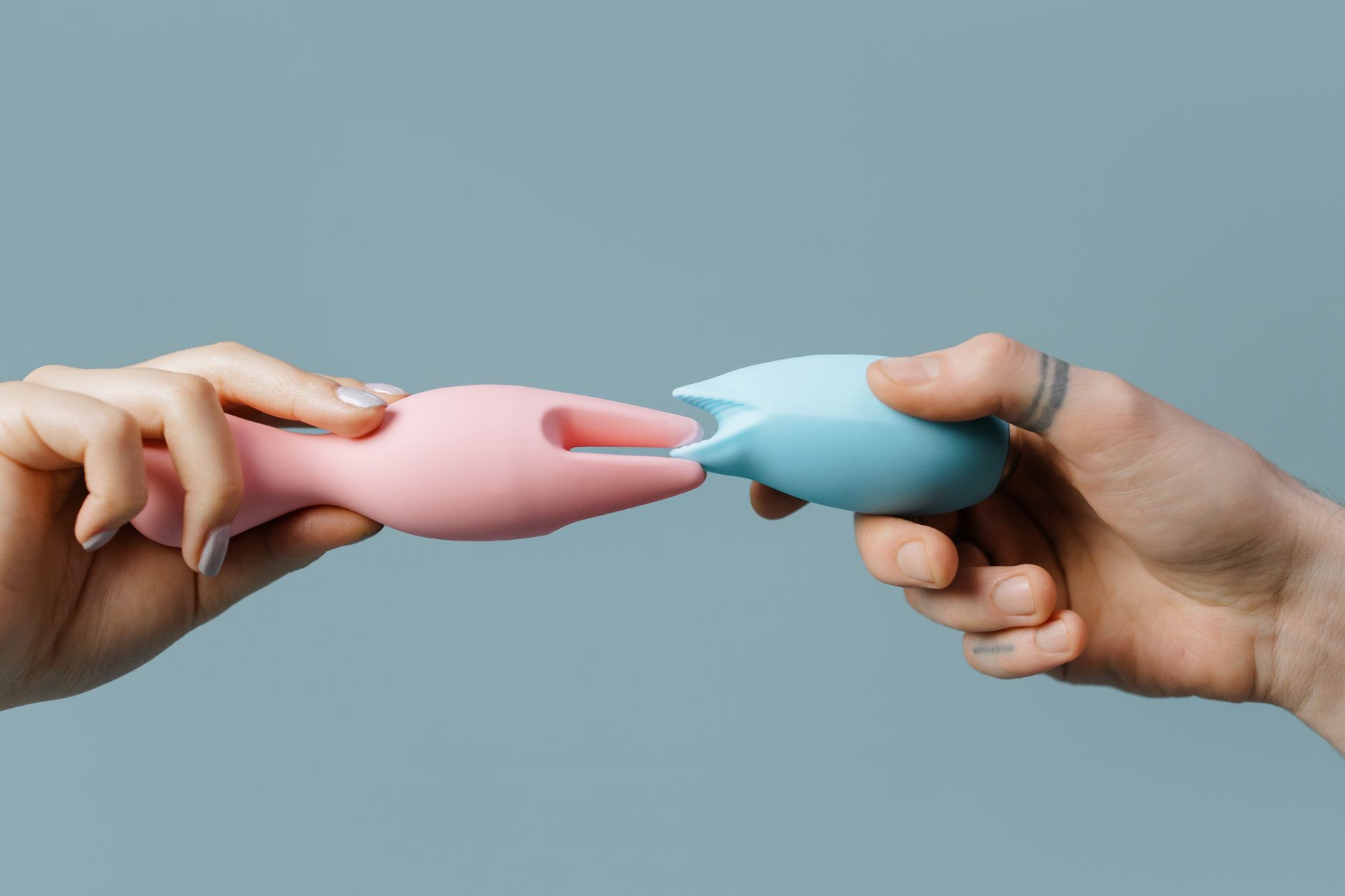
A lemon vibrator, by contrast, uses suction technology. Instead of moving side-to-side thousands of times per second, suction stimulates the clitoris by creating gentle pressure waves. Think of it less like a vibrator and more like a wave of sensation that pulses outward from the clitoral head. The tissue doesn't get pummeled. The sensation is broader, deeper, and often wildly more satisfying.
Here's the clinical part that matters: suction technology doesn't require the same blood flow response as traditional vibration. For people over forty-five whose vascular response to arousal is slower or less intense, suction bypasses that friction entirely. You're stimulating the actual nerve clusters in a way that older tissue responds to more readily.
How tissue sensitivity shifts after forty-five
Three main changes happen:
Epithelial thinning. The outer layer of clitoral tissue becomes more delicate. This sounds like a problem, but it's not. It actually means the nerves are closer to the surface. You're more sensitive in some ways, not less. The difference is that sensitivity to rough handling goes up. Sensitivity to the right kind of stimulation often goes way up.
Collagen breakdown. The scaffolding that supports tissue elasticity decreases. This means tissue doesn't bounce back as quickly from intense pressure. A lemon vibrator's suction approach avoids the compression altogether, so you skip this problem entirely.
Shifts in arousal blood flow. Blood engorgement of the clitoris still happens after forty-five, but the response is slower to build and slower to resolve. This isn't a flaw. It's actually an invitation to slow down, build anticipation, and use longer warm-up time. A lemon vibrator paired with this slower pacing is often more satisfying than the quick, intense approach of younger years.
The practical setup that works
If you're picking up a lemon clitoral vibrator for the first time in your midlife years, here's what I recommend:
Start with the lower intensity settings. Most lemon vibrators have 8-12 suction patterns and intensity levels. Begin at level 1 or 2. You're not being cautious. You're being smart. Your nervous system has had forty-plus years to calibrate to certain stimulation patterns. A lower intensity setting gives your body time to recognize what's happening and respond. Many people find they prefer patterns 3-5 their whole session, never going higher. That's completely normal and says nothing about your capacity for pleasure.
Budget 20-30 minutes total. This includes warm-up. Start with manual touch or a partner's attention for the first 10-15 minutes. Your clitoris needs time to engorge and become fully responsive. Then introduce the lemon vibrator. This pacing feels luxurious, not like you're failing at "getting there quick."
Use plenty of water-based lube. Even if you don't think you need it, use it anyway. Lube isn't a fix for a problem. It's a tool for sensation. It lets the suction cup create a better seal, which means smoother, more consistent sensation. A lemon vibrator glides better, feels more integrated into your body, and creates less friction against any thinner tissue.
Experiment with angle. A lemon vibrator can be held directly on the clitoris, angled slightly, or positioned to suction the entire vulval mound. After forty-five, what feels best varies wildly person to person. Some people find direct suction on the clitoral head too intense and prefer the sensation across a wider area. Others want precision. Try different angles across several sessions before assuming one position is "right."
The emotional piece nobody talks about
Using a lemon vibrator after forty-five often brings up weird feelings. You might notice relief. You might notice shame that you need something different than you did at thirty. You might feel grieving for the pleasure experience you had before.
All of that is normal.
Honestly, midlife pleasure is often better because you have permission you didn't have before. You're not performing for anyone. You're not worried about whether you're "normal." You know your body, and you're willing to invest in tools and time that actually work.
If you're in a partnership, this is worth discussing separately from sex itself. "My body responds differently now, and I want to explore what feels good" is a completely different conversation than "Let's have sex." One is about self-knowledge. One is about coordinating pleasure with another person. Keeping them separate actually strengthens both.
When to explore lemon suction technology specifically
A lemon vibrator makes particular sense if:
You've noticed that traditional vibrators feel too buzzy or numb. Suction creates a sensation that's distinctly different from vibration. Many people who've written off vibrators for years find that suction technology actually works for them.
You want longer, deeper pleasure sessions. Because suction doesn't rely on the same rapid tissue compression, you can use it for 30-45 minutes without discomfort. Many people find they experience multiple orgasms, or one prolonged, deep orgasm that builds more gradually.
Your clitoris feels tender or sensitive to direct touch. Suction stimulates the entire clitoral complex without isolating just the head. This broader stimulation often feels more integrated and less intense than pin-point vibration.
You're exploring pleasure solo after years of partnered sex. A lemon clitoral vibrator gives you a reliable, consistent sensation you can learn and return to. That predictability is often grounding, especially if you're rebuilding confidence in your own pleasure.
Questions to ask yourself before buying
Do you prefer broad or focused sensation? A lemon vibrator offers both depending on pressure, but some people naturally lean toward one or the other. If you've always loved pinpoint stimulation, you might need to experiment with pressure and angle. If you've always wanted broader sensation and never quite found it, suction is likely your answer.
How much time do you actually want to spend? If you're looking for efficient, five-minute pleasure, a lemon vibrator isn't optimized for that. They're designed for longer sessions. If you want to settle in and spend 30-45 minutes on pleasure, they're phenomenal.
Are you exploring solo or with a partner? If it's solo, a lemon vibrator is pure self-knowledge. If it's partnered, you might want to do one solo session first so you know what you like before introducing it into shared experience.
The FAQ section
Is it normal that I feel different sensation now than I did at thirty?
Completely normal. Your clitoral tissue has less collagen, less blood vessel density, and responds to arousal more slowly. That's not worse. It's different. Many people find that slower arousal actually deepens pleasure because it forces you to slow down and pay attention instead of chasing quick intensity. Sensation actually often increases with age because the nerve endings sit closer to the surface of thinning tissue.
Will a lemon vibrator work if I take antidepressants that affect sensation?
Often yes, especially compared to traditional vibrators. Suction technology stimulates a broader area of clitoral tissue and works through pressure rather than rapid oscillation. Many people on SSRIs find that suction vibrators are among the first tools that create noticeable sensation again. Start low, give yourself time, and experiment across multiple sessions. If numbness is severe, talk to your doctor. Sometimes a dosage adjustment or timing shift (taking meds at night instead of morning) helps. A lemon vibrator isn't a replacement for medical conversation, but it can be a useful exploration tool.
Can I use a lemon vibrator if I have vulvodynia or clitoral pain?
Maybe. If you have diagnosed vulvodynia, check with your doctor or pelvic floor therapist first. Some forms of vulvodynia respond well to gentle suction stimulation because it avoids direct pressure. Other forms require complete rest. Don't guess. The right medical professional can tell you whether suction-based toys are appropriate for your specific situation. If you get the green light, start at the absolute lowest intensity and build from there.
How often can I use a lemon vibrator?
As often as feels good. There's no limit. Some people use them daily, others a few times per week, others occasionally. Listen to your body. If sensation feels healthy and pleasurable, you're fine. If you notice irritation or numbness from overuse, take a break. That said, most people don't overuse something that feels genuinely good. You'll naturally find your rhythm.
What if my partner is curious but nervous about introducing toys?
Start the conversation about your pleasure first, not the toy. "I'm exploring what feels good in my body now, and I want to experiment with different tools" is different from "I want us to use this toy." Once your partner understands it's about you knowing yourself better, not about their performance, the anxiety usually drops. Some partners find watching you explore actually deepens their own interest. Others prefer to stay out of it. Both are fine. Your pleasure matters. Their comfort matters. These don't have to be the same conversation.
Does a lemon vibrator actually work better than my fingers after forty-five?
Yes, usually. Your fingers are still great for exploration and warm-up, but fingers get tired, and they can't sustain consistent pressure for the length of time that midlife pleasure often needs. A lemon vibrator sustains sensation for as long as you want. Plus, because suction works through pressure waves rather than friction, it often reaches sensation in your body that fingers simply can't access. Use both. Fingers plus a lemon clitoral vibrator is often the ideal combination.
The bigger picture
After forty-five, your body isn't declining into less pleasure. It's shifting into a different kind of pleasure. Slower doesn't mean worse. Different doesn't mean broken. The lemon vibrators and other clitoral vibrators that work through suction technology are designed for exactly this shift. They're not a compensation for aging. They're an upgrade for what your body actually needs now.
The most important thing isn't which toy you use. It's that you're willing to explore what feels good, to invest in tools that actually work for your body, and to separate pleasure from performance. That's where midlife pleasure gets genuinely better than what came before.
If you're curious about exploring, start with a lemon vibrator at the lowest setting, give yourself time, use plenty of lube, and don't rush the warm-up. Your body knows what to do. It just needs the right approach.
Have questions about what might work for your body? Reach out at /contact. We're here to help you figure out what actually serves your pleasure now.