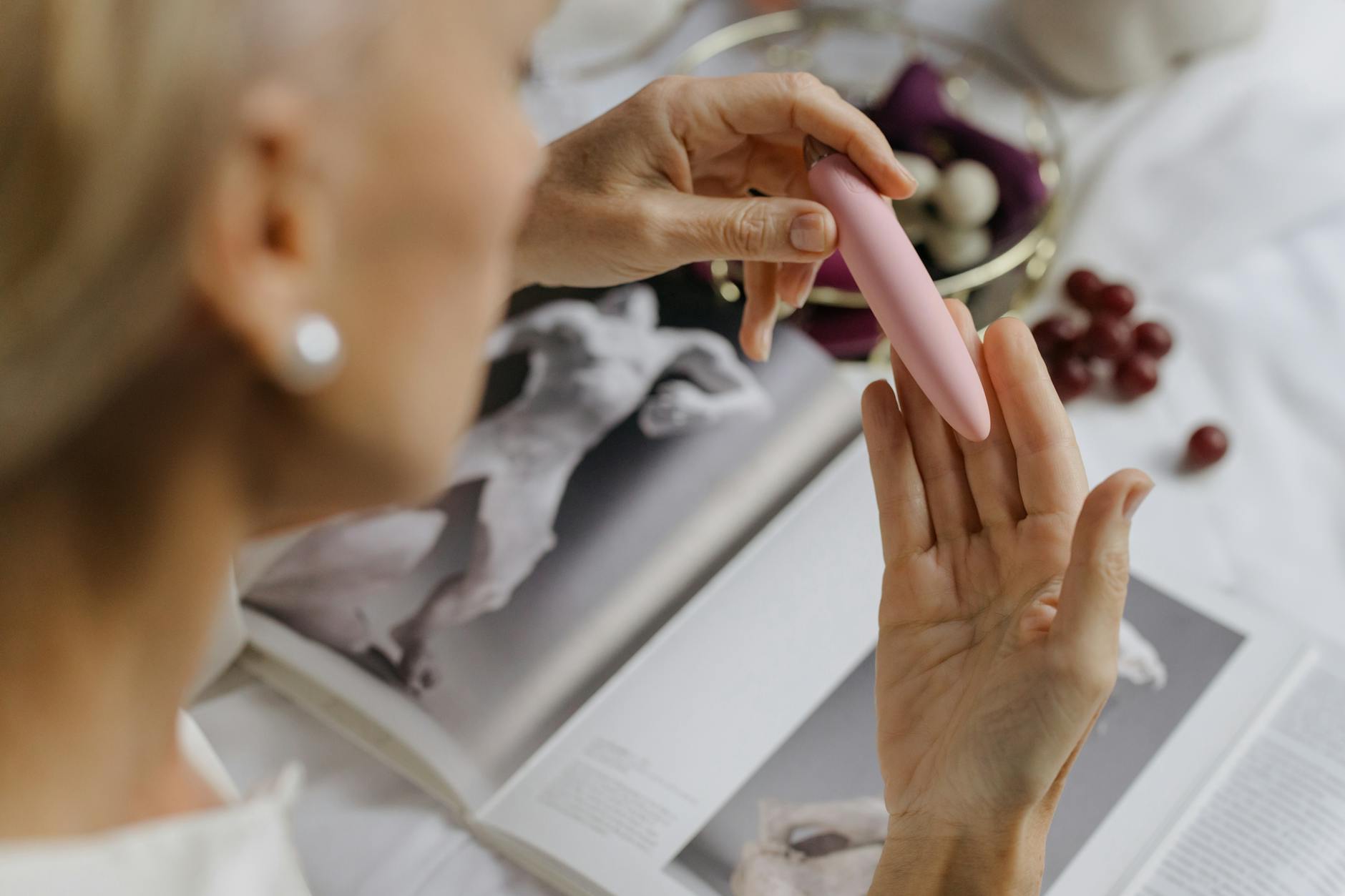
The conversation nobody wants to have (but should)
Let's be real. The moment you think about bringing a vibrator into bed with someone new, your brain probably goes to a few uncomfortable places. Will they think you don't want them? Will it feel clinical? Will it ruin the mood? None of that is true, but the anxiety is completely legitimate.
Here's what I've seen in twenty years of relationship counseling: couples who can talk about pleasure directly, without shame or apology, have better sex. Not just physically better. Actually connected, curious, less performance-driven better. A lemon clitoral vibrator isn't a replacement for your partner. It's a conversation starter that says, "I want to show you what makes me feel good, and I want you involved."
The timing and framing matter more than the vibrator itself.
When to bring it up (spoiler: not in bed)
The worst moment to introduce a lemon vibrator is mid-sex when things are already happening. The second worst is right before you think you'll need it. The best moment is casual, clothed, low-stakes.
This could be over coffee, or while watching something, or literally anytime you're both relaxed and not about to be intimate. You want him or her to have time to think about it without feeling ambushed. You also want to normalize it in conversation before it shows up in the bedroom.
Try something like: "I've been using a vibrator solo and I really like how it feels. I'd love to explore it together sometime. Would that feel okay to you?" That's it. You're not asking permission. You're offering information and checking in.
Most people will say yes immediately. Some will need a minute to adjust. A very small number might say no, which tells you something important about the relationship. But statistically, people are way more curious and accepting than the anxiety suggests.
Why the Lem works particularly well early on
There are a lot of lemon vibrators out there. The Lem by Get Lem Official is designed with suction technology that stimulates without the kind of intense friction that can feel intimidating to someone watching for the first time. It's quieter than a traditional vibrator, which means less performance pressure. The aesthetic is modern and approachable, not clinical or extreme.
For new partners specifically, this matters because you're not trying to prove something. You're trying to build trust and curiosity together. The Lem's gentle suction creates sensations that feel different from penetration, which means it's not replacing what your partner does. It's adding a layer.
The logistics that nobody mentions
Three practical things that change the experience:
Lube matters more than you think. Even if you don't usually use it, try a water-based lube when you're introducing a vibrator. It reduces friction, changes the sensation in ways that feel less intense, and honestly it just feels better. It's not a sign something is wrong. It's a signal that you're paying attention to sensation.
Start with lower settings. If you're already comfortable with your solo routine at pattern 5 or 6 on the Lem, dial it back to 2 or 3 when your partner is involved. You want to find the sweet spot together, not hit them with your full-intensity preference on day one.
The first time is awkward. That's normal. You're both adjusting to the new dynamic. You might feel self-conscious. They might feel unsure about pacing. The second time is usually much better, and by the third time it's integrated into your normal sex life. This is completely predictable and nothing to worry about.
What your partner actually needs to know
People worry their partners will feel inadequate. In reality, most people feel relieved. Here's why: they've probably been worried that they're not making you come, and suddenly there's a tool that makes pleasure accessible and visible. That's often a load off.
The conversation piece is: "This isn't about you not being enough. This is about us being curious together." That might sound like a line, but it's literally true. Solo pleasure has nothing to do with partnership pleasure. And a partner who understands that you can have multiple types of sensation, multiple sources of pleasure, is a partner who's willing to be flexible and adventurous.
If your partner's worried about it feeling impersonal, you can literally use it while making eye contact, while they touch you elsewhere, while they're inside you. The lemon vibrator isn't a replacement. It's an addition.
The actual mechanics of introducing it during sex
A lot of people wonder: do I ask permission each time, or does it become part of the routine? The answer is both, but the conversation gets shorter.
First time: "Can I use this while we're together?" Second time: "Want me to grab the Lem?" After that it's just part of your sexual vocabulary, like any other preference.
Technique-wise, you have options. You can use it on yourself while they penetrate you. You can hand it to them and show them what pressure and rhythm feels good. You can use it during foreplay as part of the warm-up. There's no wrong way as long as you're both checking in.
One thing I recommend: the first time, keep the focus on you. Let them watch, let them see what you enjoy, let them feel what it's like when you're fully present and turned on. That's often more connecting than trying to coordinate complicated positions.
The communication framework that works
If something doesn't feel good, or if the mood gets broken, or if timing feels off, you need to be able to say that without it becoming a fight. This is where a lot of new couples stumble.
Instead of "It felt weird" try "That rhythm wasn't working for me but I want to try it differently." Instead of apologizing for needing a moment, say "I want to slow down and find what feels best." The goal is to keep the conversation cooperative, not defensive.
You're literally building a shared language around pleasure. That takes a few iterations. That's the whole point.
Why this matters beyond the bedroom
Here's what I've observed: couples who can talk openly about pleasure without shame develop better communication around other vulnerable topics. Money, family conflict, career stress. Once you've had a genuine conversation about what your body needs and what your partner is willing to explore, other hard conversations become easier.
Introducing a lemon clitoral vibrator isn't really about the vibrator. It's about saying, "I trust you with what I actually want." That's the foundation of every good relationship.
When to check in after the first time
Wait until you're both clothed and the sex is over. Say something like: "That felt really good. What was your experience?" This isn't a performance review. You're gathering information about how they felt, what surprised them, whether they want to do it again.
Most partners will say it was hot and ask when you can do it again. Some will need more time to sit with it. A small number might have concerns that are worth hearing. All of that is fine data that helps you move forward together.
The worst thing you can do is assume you know what they're thinking. Ask.
FAQ
Does using a vibrator with a partner mean my solo play matters less?
No. Solo play is how you learn what you like without external pressure. That knowledge makes partnered sex better. It's not either-or.
Will my new partner think I'm high-maintenance if I use a lemon vibrator?
Not if you frame it as curiosity, not as a complaint about them. "I want to show you something I enjoy" is different energy than "You haven't been making me come." The first opens a conversation. The second closes one.
What if my partner says no?
Then you have real information about his or her boundaries. That's useful. You can explore whether it's a hard no or a "not yet" no. And you can decide if that boundary is workable for you. Sometimes it is. Sometimes it means you're not compatible. Both are okay outcomes.
How do I know if the Lem is the right choice for partnered play?
The Lem's suction technology is less intimidating than traditional vibration for new partners, and it's quieter so there's less performance pressure. If you want something that feels accessible and non-threatening, it's a solid choice. You can also read reviews or check out our buying guide for other options.
Can I use a vibrator with a partner if I've never used one solo?
Yes, but I'd recommend solo exploration first. That way you know what you like, what settings feel good, and you're not discovering it for the first time with someone watching. The pressure is different. It's worth giving yourself a few sessions to get comfortable.
Should I use the same vibrator solo and partnered?
Yes. Using the same tool means you can show your partner what you like, demonstrate pressure and rhythm, and it feels less clinical. You're not switching devices mid-flow.
The bottom line
New relationships come with enough uncertainty without adding shame about pleasure on top of it. A lemon sexual toy becomes part of your shared language when you treat it like you'd treat any preference: matter-of-fact, curious, and open to feedback.
Your pleasure matters. Your partner probably wants to be part of that. The conversation is the hardest part. After that, it gets easier every time.
If you're ready to start that conversation and you want to explore a vibrator designed with partnered play in mind, the Lem is built for exactly this kind of intimate, connected exploration. But mostly, talk to your partner. That's the real foundation.