The pelvic floor recovery paradox
You've been cleared by physical therapy. Your provider said you can resume sexual activity. But "resume" and "resume safely" are two different sentences, and your body knows it. Reintroducing pleasure after pelvic floor dysfunction or injury is not about jumping back to what you did before. It's about relearning what your body can do now.
Here's the thing. Many people assume pelvic floor recovery means abstinence until you're "fixed." But pleasure, when approached carefully, can actually accelerate healing. The key is knowing how to use tools like a lemon clitoral vibrator without triggering tension, pain, or setbacks.
What actually happens during pelvic floor recovery
Your pelvic floor muscles have been either overactive (too tight, unable to relax fully) or weak (unable to contract strongly enough). Physical therapy retrains these muscles to find neutral. But neutral is a skill. It takes repetition and awareness to maintain it, especially when arousal naturally triggers tension.
When you're aroused, your pelvic floor wants to contract. This is normal and healthy. But if you've spent months in physical therapy learning to release tension, that automatic contraction can feel threatening. You might hold back from arousal entirely, which creates a different kind of tension: the tension of avoidance.
A lemon vibrator, used correctly, can bridge that gap. Unlike penetrative sex or manual stimulation, clitoral suction allows you to build arousal and work toward orgasm without requiring pelvic floor participation. The Lem stimulates through gentle suction, not friction or pressure. That distinction matters enormously during recovery.
Why gentle suction works better than vibration alone
Traditional vibrators work through rapid oscillation. They're effective, but they demand your pelvic floor engage. Air-suction toys like the Lem work differently. Suction stimulates the thousands of nerve endings in the clitoral complex without mechanical vibration that might trigger involuntary tension.
For someone in pelvic floor recovery, this is significant. You can focus on arousal and pleasure without that constant background task of managing pelvic floor tension. Many clients tell me this feels like permission to relax in a way they haven't in months.
Secondly, suction creates consistent pressure rather than repetitive impact. If your pelvic floor has been overstimulated or injured, repetitive vibration can feel like re-triggering the original problem. Suction feels different. It feels gentler, which often translates to actual gentleness at the tissue level.
Starting small: the first week back
Assuming your physical therapist or gynecologist has cleared you for sexual activity, here's how to reintroduce a lemon vibrator safely.
Don't start in bed. Start in a context where you're relaxed and have no pressure to "perform" or reach orgasm. A bath, a quiet afternoon alone, a moment after meditation. You're gathering data about what your body can tolerate, not chasing a result.
Start at the lowest setting. The Lem has multiple intensity levels. Begin at pattern 1. Spend 5 minutes there. You're not trying to orgasm. You're trying to feel sensation without pain or cramping. If pain appears, stop. If cramping appears in the pelvic floor, stop. If arousal builds gently, good. That's the goal.
Keep your pelvic floor soft. This is the hardest part of pelvic floor recovery. During arousal, your instinct is to grip. Your brain wants to engage those muscles. Instead, try this: breathe into your pelvic floor. Imagine it softening with each exhale. You can place a hand on your lower abdomen to remind yourself to stay relaxed. This isn't suppressing arousal. It's redirecting how your body channels it.
Weeks two through four: building tolerance
Assuming your first week went well (no pain, no unexpected cramping, mild arousal buildup), you can increase time and intensity slightly.
Week two: 10 minutes at patterns 1 and 2. You're staying in the low-intensity range. You're building familiarity with how the Lem feels and how your body responds. Some people find that suction feels strange initially. That's normal. The sensation is different from vibration. Give it three to five sessions before deciding if it's right for you.
Week three: 15 minutes, patterns 1 through 3 if comfortable. You might start moving toward orgasm, but don't force it. If climax happens, note how your pelvic floor responds. Does it relax afterward or tense? Does pain appear afterward? You're developing awareness.
Week four: 20 minutes, full range of intensity. At this point, if you've experienced no pain or setbacks, you've probably rebuilt enough tolerance to use a lemon vibrator the way you would have pre-injury. You've proven to yourself that pleasure doesn't mean regression.
Throughout all of this, keep your water-based lubricant nearby. Even if you're not experiencing dryness, lubrication reduces friction and makes the sensation feel softer. This is especially true during recovery when tissues might be more sensitive.

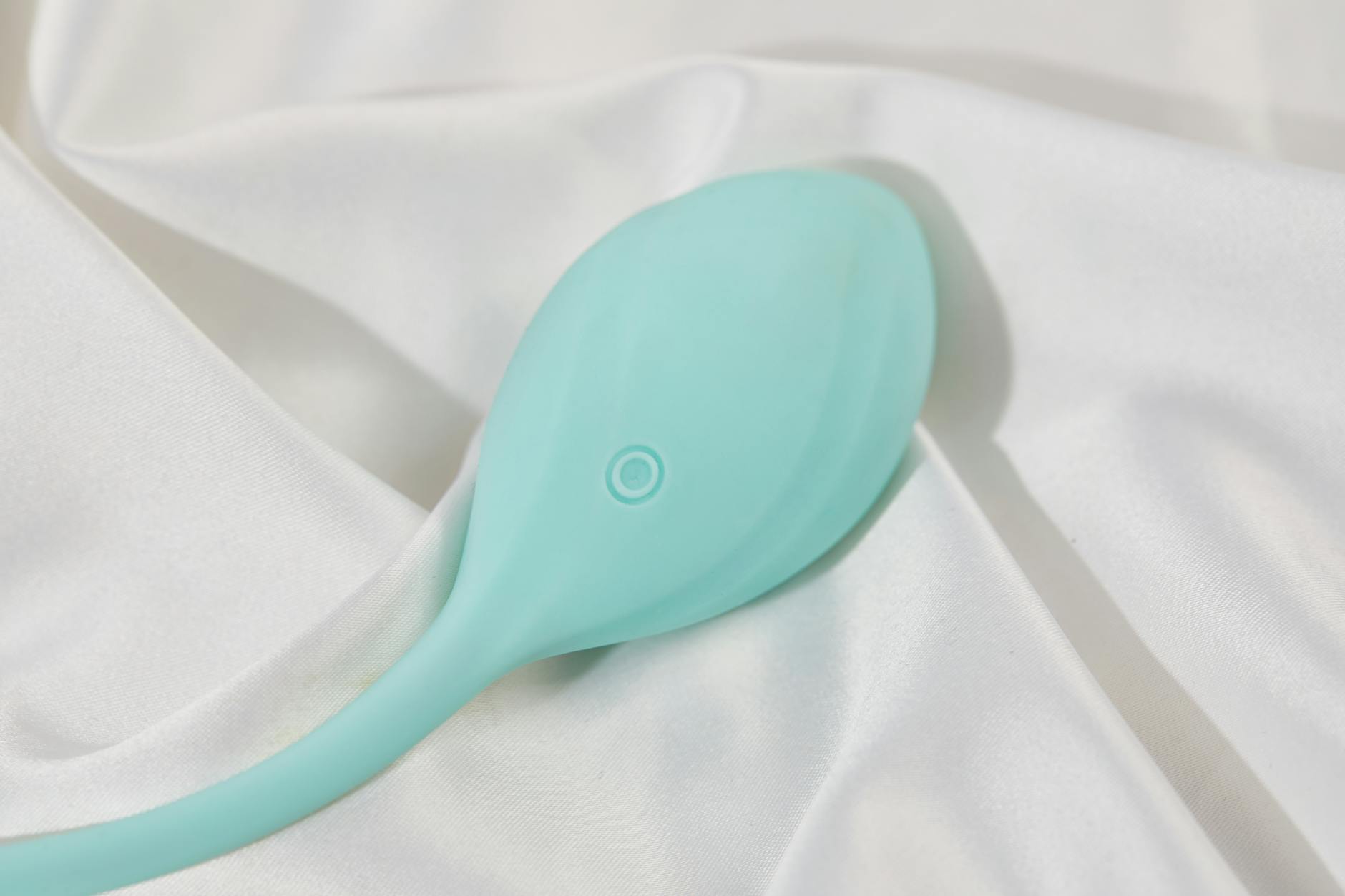
Photo by Madison Inouye on Pexels
Managing pelvic floor tension during arousal
This is the core skill of recovery. You need to learn how to be aroused without gripping.
One technique I teach is box breathing paired with pelvic floor release. When you feel arousal building and you notice your pelvic floor tightening, pause the vibrator. Breathe in for four counts, hold for four, exhale for four, hold for four. As you exhale, consciously release the muscles around your pelvic floor. Imagine them spreading wide. After three cycles, resume the vibrator.
Another approach: progressive awareness. Notice where you hold tension when aroused. Is it your glutes? Your inner thighs? Your lower belly? Often, if your pelvic floor is gripping, other muscle groups nearby are too. You can't always release the pelvic floor directly, but you can release your glutes, and that gives your pelvic floor permission to soften too.
During penetrative sex, kegel exercises teach you to contract the pelvic floor. During recovery, you're learning the opposite. You're learning to release. A lemon vibrator is gentler than a partner, so it's a safer space to practice this skill. Use it as a rehearsal for full sexual activity when you're ready.
Pain signals versus normal sensation
You need to distinguish between pain that means "stop" and sensation that means "this is working."
Pain feels sharp, burning, or cramping. It's usually localized. It gets worse if you continue. This is a stop signal. If you experience pain during use, pause immediately, breathe, and wait. If it doesn't resolve in a few seconds, you're done for the session.
Sensation that's normal during recovery might feel: mild pressure, warmth, slight tingling, a gentle ache in the pelvic floor that's not quite pain. This is your nervous system waking up. It's uncomfortable, but it's not harmful. You can continue, but reduce intensity if the sensation feels overwhelming.
Here's a practical test: if you have to wonder whether it's pain, it's not the kind of pain you should push through. Pain that requires interpretation isn't pain you're ready for.
When to pause or seek help
Three scenarios warrant pausing your recovery practice and checking in with your physical therapist.
First: pain that persists for hours after use. A light ache during is fine. An ache that lasts into the next day suggests you did too much too fast.
Second: recurring cramping or spasming in the pelvic floor that doesn't resolve after you stop. This signals muscle overload.
Third: emotional resistance that prevents you from attempting use at all. Sometimes pelvic floor dysfunction creates psychological tension around pleasure. If you're avoiding use entirely out of fear, not pain, that's worth discussing with a therapist who specializes in somatic work or pelvic floor recovery.
Your physical therapist needs to know you're reintroducing pleasure. They can assess whether your progress supports it. This isn't judgment. It's teamwork.
Rebuilding sensation after numbness
Some people experience reduced sensation during or after pelvic floor dysfunction. Numbness, dulling, or a disconnected feeling from the clitoral area. A lemon vibrator can help rebuild that sensation.
The suction mechanism in clitoral vibrators like the Lem stimulates nerve endings directly without the mechanical pressure that sometimes contributes to numbness. Over time and repeated gentle use, sensation often returns. You're not forcing it. You're creating conditions where it can naturally rebuild.
Expect this process to take weeks or months. Sensation doesn't flip back on like a light switch. It gradually sharpens. You might notice one week that the lowest setting feels more distinct than it did the previous week. That's progress.
Communicating with your partner during recovery
If you have a partner, they need to understand what you're doing and why. This isn't a solitary recovery project, even if you're using a lemon vibrator alone.
Explain that you're rebuilding tolerance, not avoiding them or sex. Reassure them that pleasure during recovery is about healing your body to be fully present with them again, not replacing partnership. Ask them to be patient with limitations. Sexual activity might look different for a while. That's temporary, not permanent.
Invite them into parts of the process if you're comfortable. They can help you time sessions, remind you to breathe, or simply be present while you explore. Some couples find that the slowness of pelvic floor recovery rebuilds emotional intimacy that was lost when sex became difficult or painful.
People also ask
How long does pelvic floor recovery typically take before I can use a vibrator again?
This depends on your diagnosis and severity. Mild cases might clear for vibrator use after 4 to 6 weeks of physical therapy. More significant dysfunction can take 3 to 6 months. Always wait for explicit clearance from your physical therapist or gynecologist before reintroducing any vibrator. Your provider might recommend starting with a clitoral vibrator like the Lem before advancing to other forms of stimulation because suction is generally gentler than vibration alone.
Can I use a lemon vibrator if I'm still in active physical therapy?
Not without approval. Physical therapy is designed to retrain your pelvic floor in a specific way. Adding sexual stimulation while still undergoing active treatment can interfere with that retraining. However, once your therapist gives you clearance to resume sexual activity (which often happens midway through a standard treatment protocol), a low-intensity lemon clitoral vibrator can be a safe part of your home practice. The key is communication with your therapist.
What if I experience pain when using a vibrator during recovery?
Stop immediately. Pain is your body's way of saying you've done too much too soon. Wait several days before trying again, and when you do, use lower intensity for shorter duration. If pain persists across multiple attempts, contact your physical therapist. You might need to dial back and spend more time at earlier stages of recovery before advancing to vibrator use.
Is it normal for my pelvic floor to feel tighter after using a vibrator?
It can be, especially early in recovery. This usually means you were working harder than intended or your pelvic floor was triggering its protective tension response. You're not doing anything wrong. Your nervous system is still learning to trust pleasure again. Try shorter sessions, focus more on breathing and release techniques, and consider whether you need more time before advancing to longer or more intense use.
Can I orgasm during pelvic floor recovery?
Yes, once you've been cleared for sexual activity. Orgasm itself isn't harmful to pelvic floor recovery. However, how you orgasm matters. If reaching climax requires gripping your pelvic floor hard, you're defeating the purpose of recovery. During early recovery, focus on pleasure and arousal without chasing orgasm. Let climax happen naturally if it does. Eventually, you'll learn to orgasm while keeping your pelvic floor relatively soft, which is actually the healthier pattern long-term.
Should I use a specific type of lube with my lemon vibrator during recovery?
Water-based lubricant is your best option. It's gentle on sensitive tissues, doesn't damage silicone, and washes off easily. During pelvic floor recovery, tissues are often more sensitive, so adequate lubrication reduces friction and makes the experience feel softer. Apply generously. You're not trying to be minimal or